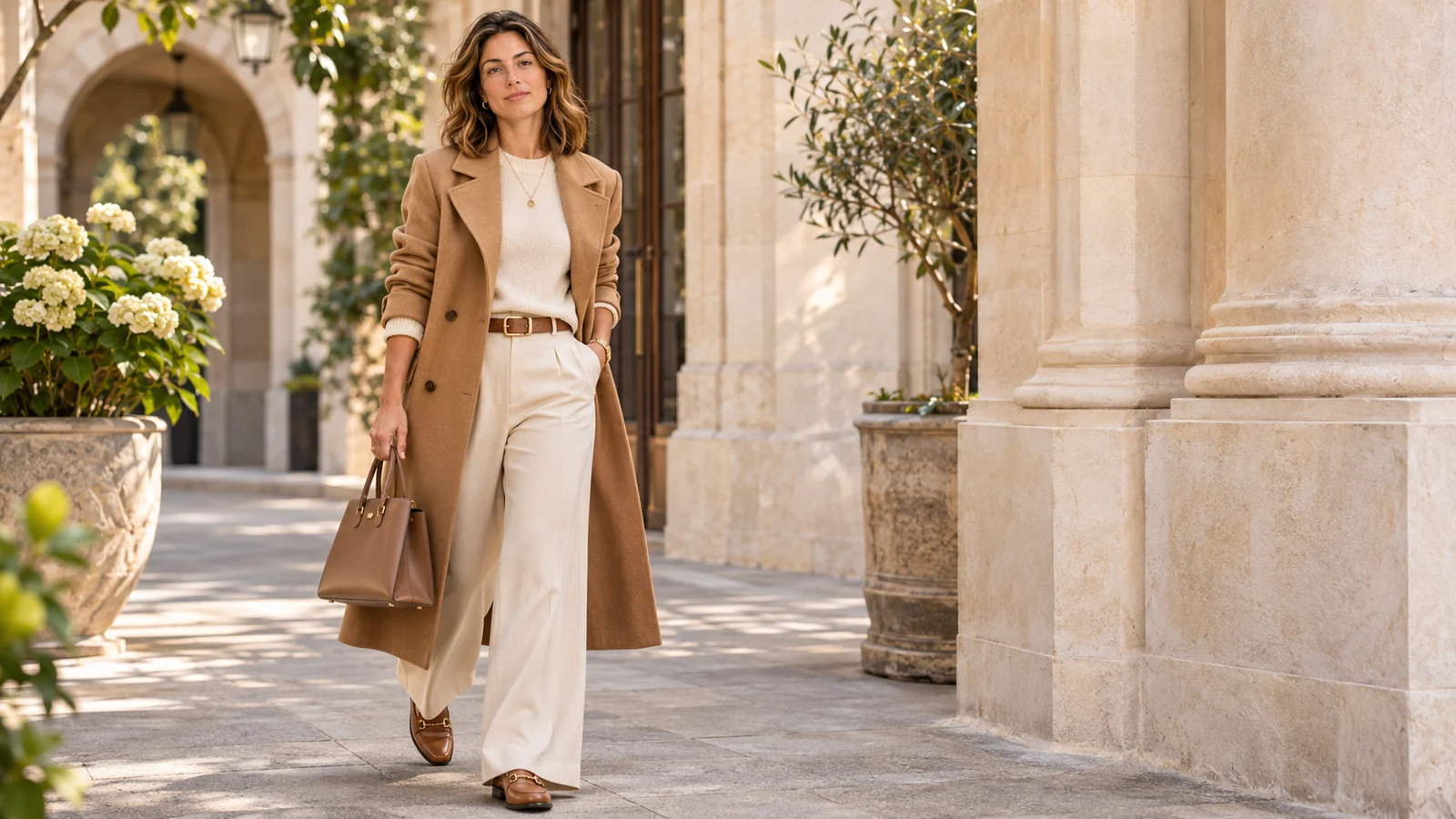
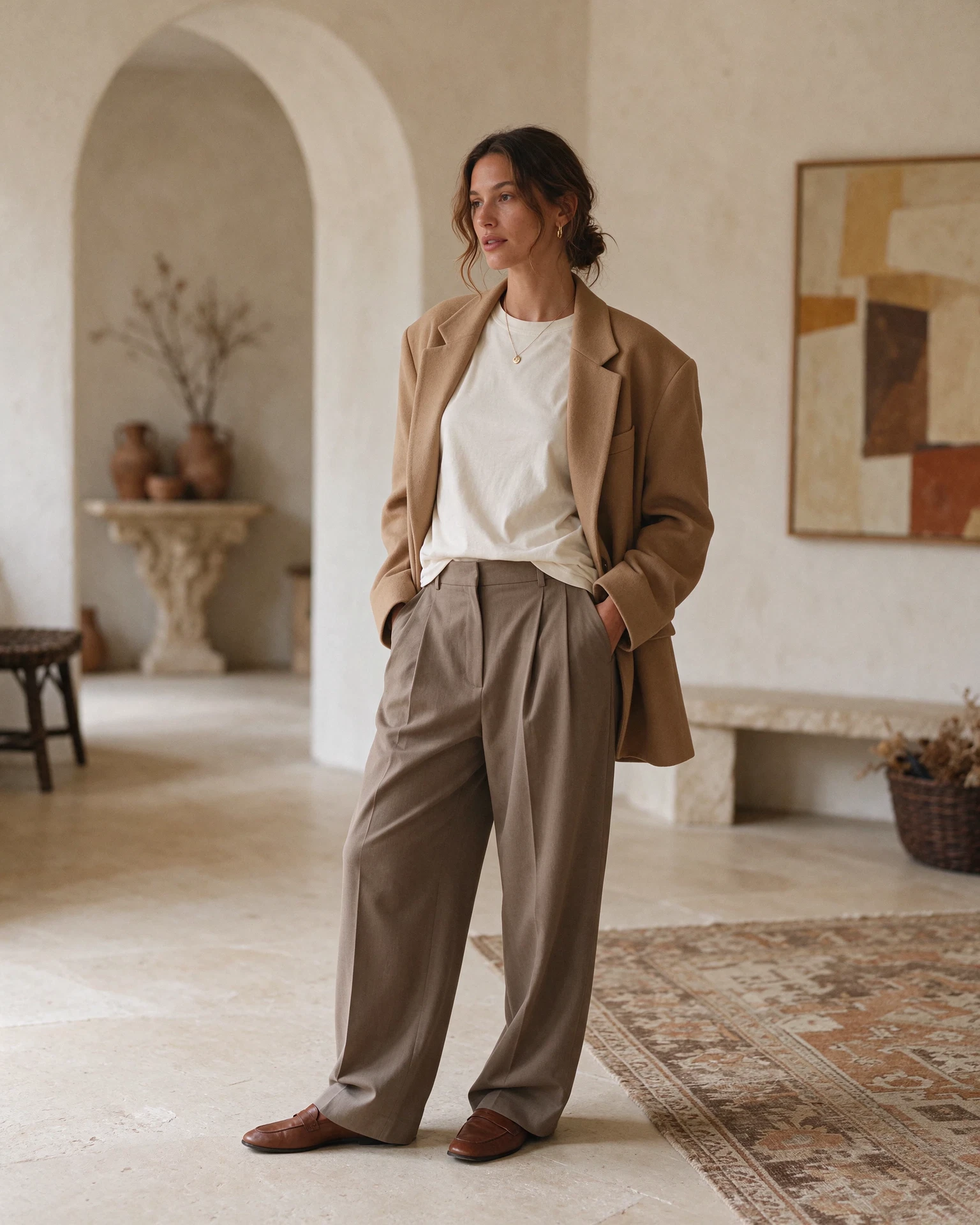
Your wardrobe, reimagined.
Before you buy anything, see what your own pieces can do. Tell the builder what you have and it will suggest combinations from your selections—not from an imaginary shopping list.
Start with what you already own
The thoughtful outfit builder
Make up to five combinations from your own wardrobe. A polished look is personal, not a measure of price or worth.
This tool does not save or send your entries. It suggests no purchases.
Price is a fact.
Polish is a perspective.
An expensive outfit is one with a high acquisition cost. That cost can reflect materials, production complexity, skilled labor, pattern development, inventory, transport, import duties, marketing, retail overhead, brand reputation and demand. Their contribution differs by product; a price tag cannot tell you the exact share of each.
An expensive-looking outfit is a subjective description for a visually considered composition. A shirt may work beautifully because the shoulders are comfortable, its fabric has the drape you want, and its color relates to your trousers—not because of its label. The same principles work with color, prints, logos, secondhand pieces and supportive shoes.
Price, textile quality, construction quality, durability, comfort, versatility and perceived sophistication are separate questions. None measures a person’s character, success or worth.
| Consideration | Expensive | Expensive-looking |
|---|---|---|
| Actual price | A measurable amount paid, including relevant acquisition costs. | Not defined by price; an outfit can be made from what you own. |
| Perceived appearance | May be casual, formal, vivid or understated. | A subjective impression shaped by how elements work together. |
| Brand recognition | A label can influence the retail price. | A visible label is optional, not proof of quality. |
| Fiber composition | May use one fiber or a blend. | Any fiber can suit an intended effect; composition is only one clue. |
| Textile quality | Must be assessed against its use, construction and performance. | Appearance alone does not reveal shrinkage, pilling or durability. |
| Construction quality | Varies by garment and maker. | Inspect seams, closures and finishes for their purpose. |
| Tailoring and fit | High price does not guarantee your preferred fit. | Personal comfort and intentional proportions can support the look. |
| Garment condition | New and expensive pieces can still be damaged or impractical. | Care, repair and normal signs of wear all need context. |
| Color and accessories | Cost does not determine the color relationship. | Coordinating or contrasting pieces is a choice, not a rule. |
| Durability and repair | Price alone does not establish either. | A visual impression cannot certify longevity or repairability. |
| Comfort and versatility | Both depend on the individual and garment. | Wearability and useful combinations matter more than a label. |
| Cost per wear | Requires actual or estimated cost and wear count. | A refined appearance does not establish value. |
| Budget and practical value | Purchasing may require a larger outlay. | Existing clothes and no-cost styling can be enough. |
| Consumer perception | Brand or price can affect expectations. | People interpret style differently; neither proves wealth. |
“Good style is a practice, not a price tag.”
What the label can’t tell you.
Turn a garment inside out. Look at how it is made, how it feels and how it behaves on you. The point is not to find one universal sign of quality; it is to find a garment suited to its job.
Seams & details
Look for stitching suited to the fabric, secure buttons, a working zipper and a hem that hangs as intended. Overlocking can be appropriate on knitwear; an unlined garment is not automatically inferior.
Long-term performance
A glance cannot establish colorfastness, shrinkage, pilling resistance or how long a seam will last. Those questions require appropriate information or testing.
Fiber labels tell you composition, not whether the fabric is strong, comfortable, ethically produced or right for your use. In the United States, most covered textile and wool products generally disclose fiber content, country of origin and a responsible business; specific rules and exceptions apply. FTC textile-label guidance.
Inspect gently and do not damage items in a store. Nondestructive visual checks are useful screening, not standardized laboratory tests. New Mexico State’s construction standards explain why the right finish depends on garment and fabric.
Fifteen things to check, gently
These observations are useful prompts, not a standardized test or guarantee. Check the relevant detail only when appropriate for the design.
Try the garment in motion
Inspect: Sit, reach and walk if a fitting is available; note pulling or discomfort. A garment must work for how you actually move and sit.
Example: A jacket feels fine standing but pulls when you reach forward.
Context: Intentional structure may limit movement by design; access and mobility needs vary. Choose the more comfortable option or leave it rather than relying on a difficult alteration.
Look along seams
Inspect: Turn the item inside out if permitted and look for skipped stitches, openings or loose ends. An obvious opening may need repair before regular wear.
Example: The underarm seam has an unstitched section.
Context: A loose thread end alone is not proof that a seam will fail; decorative raw seams may be intentional. Ask whether a repair is practical and reflected in the price; do not pull at the seam.
Check room for alteration
Inspect: Look for available seam allowance inside without unpicking anything. There must be usable fabric and suitable construction before a garment can be let out.
Example: A side seam has very little spare fabric.
Context: Lined, overlocked, stretch or patterned garments can need specialist assessment even when fabric is visible. Do not assume a too-small garment can be enlarged; obtain a tailor's assessment first.
Notice stitch consistency
Inspect: Look at visible stitching for long gaps, tangles or obvious breaks. Even-looking stitching can indicate care in assembly, while broken stitching may need attention.
Example: A pocket edge has a short area where the thread has come away.
Context: Decorative or hand stitching may be deliberately irregular; appearance alone cannot prove strength. Consider the size and location of any repair rather than judging by stitch appearance alone.
Inspect hems and cuffs
Inspect: Check that the hem is attached and lies as designed on both sides. Detached edges can catch or need prompt repair.
Example: A trouser hem has come loose near one ankle.
Context: Asymmetric and raw-edge hems may be intentional. A simple loose hem may be manageable, but include time or a repair quote in your decision.
Examine the surface
Inspect: Look for holes, thinning, pulls and areas of abrasion in good light. Existing damage can affect appearance, comfort or future use.
Example: The fabric at the inner thigh is notably thinner than the surrounding cloth.
Context: Slubs, distressing and some surface variation may be part of the design. Pass if the damage is in a high-friction area and you would not be comfortable repairing it.
Look for pills and fuzz
Inspect: Check underarms, sides and other rub areas for small balls of fiber or fuzz. Existing pilling tells you about the present condition, not a definitive future lifespan.
Example: A secondhand cardigan has visible pills where a bag might rub.
Context: Pilling can occur across fibers and prices; some pills can be removed carefully. Buy only if the current texture and potential maintenance are acceptable to you.
Test fastenings gently
Inspect: If permitted, fasten and unfasten buttons, snaps and hooks without forcing them. A working closure affects comfort and usability.
Example: A snap closes unevenly or a button is missing.
Context: A missing standard button may be easy to replace; accessible closures may look different from conventional ones. Factor in a repair, replacement or adaptive closure; skip it if the fastening does not work for you.
Check the zipper
Inspect: Move the zipper slowly through its range if the shop allows it. A zipper that catches or separates may be frustrating or costly to repair.
Example: The slider jams on the lining every time it moves.
Context: Some designs have a deliberate guard or stiff new slider; do not force it. Seek a repair quote before purchase if a full replacement may be needed.
Check lining and pockets
Inspect: Look inside pockets and linings for tears, stains and trapped fabric. Hidden damage may affect comfort or function even if the outer shell looks good.
Example: A pocket bag has an open seam, so keys could fall through.
Context: An unlined garment can be a deliberate lightweight design, not a defect. Assess whether a pocket repair or lining replacement is worth your time or budget.
Consider pattern placement
Inspect: Look at stripes or checks at prominent seams and decide whether the alignment bothers you. Pattern alignment affects appearance and can indicate design attention at visible joins.
Example: A horizontal stripe changes height at the front placket.
Context: Curves, bias cuts, pockets and intentional design can prevent exact matching; it is not a durability test. Treat matching as a personal preference, not a guaranteed marker of quality.
Check opacity in context
Inspect: Hold the fabric up to light and, if possible, check it while worn with your intended underlayer. Sheerness can change what you feel comfortable wearing or need underneath.
Example: A light shirt is more translucent in daylight than it appeared indoors.
Context: Sheer garments can be intentional and opacity depends on lighting and personal preference. If an underlayer is needed, consider whether you own one and whether another layer suits the weather.
Read the care label
Inspect: Check washing, drying, pressing and professional-cleaning directions before buying. The care routine and cost need to fit your real life.
Example: A jacket specifies dry clean only, but you need an easy home-wash layer.
Context: Some used or handmade garments have missing labels; fiber content alone cannot establish safe care. Choose a garment whose stated care you can manage; ask a textile-care professional if the label is absent.
Read the fiber label
Inspect: Note the listed fibers and whether the shell, lining or trim have different compositions. Composition is one useful clue for comfort, allergies and care.
Example: A mostly wool jacket has a polyester lining that touches the arms.
Context: A percentage does not reveal yarn quality, weave, finishing, comfort or performance by itself. Use composition alongside fit, construction and the care label rather than as a pass-or-fail rule.
Look for stains and odor
Inspect: Examine the collar, underarms and other high-contact areas; ask about any marks or odors. Some existing stains or odors may not come out with the care permitted.
Example: A vintage blouse has a yellow mark near the collar and no care label.
Context: A known mark may be acceptable to you, and strong fragrance can mask the garment's actual condition. Assume removal is uncertain; buy only if you would be comfortable with the item as it is.
Also notice the garment’s balance as it hangs, whether an appropriate stretch fabric returns toward shape without pulling it hard, and whether collars, cuffs or lapels have suitable interfacing. A visual check of these details still cannot establish recovery after repeated wear or care.
Fabric appearance isn’t the whole story.
A fabric’s fiber, yarn, weave or knit, weight and finish all play a part. A soft drape can be lovely; so can structure. Neither is a guarantee of quality.
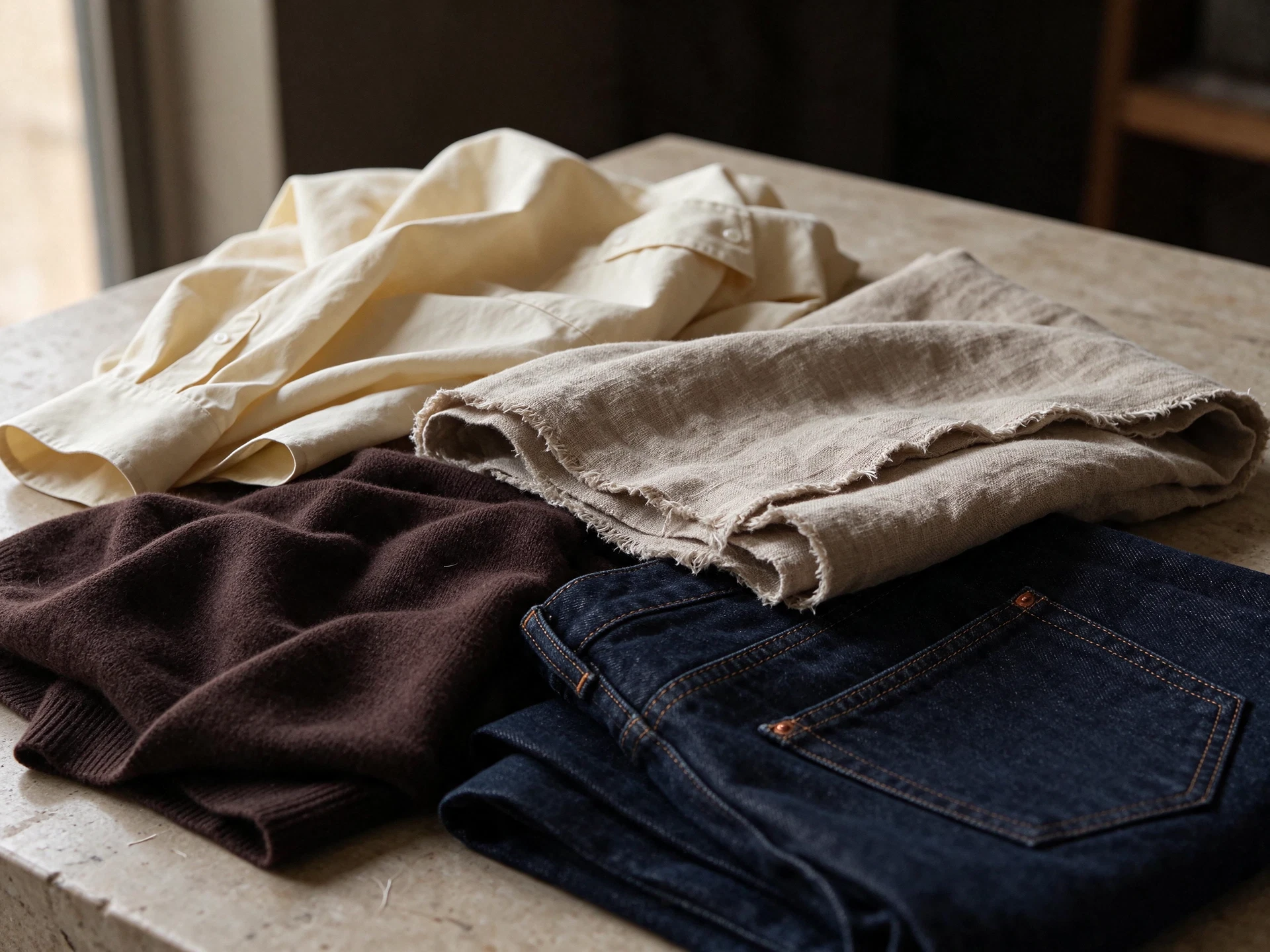
Fiber is what the material is made from; weave or knit describes how yarns are constructed. Satin describes a weave and surface effect rather than a specific fiber. Cotton and polyester can each make a range of fabrics with very different handles and performance. Photos can hint at surface and drape but cannot verify long-term behavior.
| Question | Useful evidence | Important limitation |
|---|---|---|
| How does it look? | Color, visible texture, opacity, fall and finish. | Lighting and screens can change perception. |
| What is it made from? | Fiber label and reliable manufacturer specifications. | Fiber percentages alone do not show durability. |
| How will it perform? | Relevant, identified tests for colorfastness, pilling or dimensional change. | Results depend on method and conditions. |
| Is it right for me? | Comfort, feel, care, weather, ease and your preferred silhouette. | Preferences vary; there is no universal best choice. |
Fourteen fabrics, explained
Tap a fabric for a practical, fiber-aware guide. The label and care instructions for the specific finished garment always take precedence.
Cotton jersey
What it is: Cotton is a fiber; jersey is a knit construction. The garment may also contain stretch fibers. Common uses: T-shirts, soft dresses and easy base layers.
Drape and structure: Often soft and flexible, with behavior that varies by weight and knit. Care: Follow the garment label for washing, drying and pressing; reshape if directed.
Keep in mind: Thin jersey can show through or twist; an opaque, substantial feel is a preference, not a quality guarantee. Try: Restyle an existing cotton tee or look for a basic secondhand one that feels comfortable.
Cotton poplin
What it is: Cotton is a fiber; poplin is a closely woven fabric, typically plain weave. Common uses: Button-up shirts, shirt dresses and lightweight skirts.
Drape and structure: Usually crisper and less stretchy than jersey, with weight and finish making a difference. Care: Follow the label; press only at its permitted setting, if you want a smoother finish.
Keep in mind: Some poplin wrinkles readily or feels restrictive; blends and finishing change its behavior. Try: Borrow or thrift a plain button-up and wear it open over a top you own.
Linen
What it is: Linen is a fiber made from the flax plant; it can be woven or knitted into different fabrics. Common uses: Warm-weather shirts, trousers and loose dresses.
Drape and structure: Ranges from crisp and airy-looking to soft and fluid, depending on the cloth and finish. Care: Follow the label, including its drying and pressing instructions; some pieces need professional care.
Keep in mind: Visible creases and irregular slubs can be normal; opacity and softness vary by fabric. Try: Try a pre-owned linen shirt or use an existing lightweight woven shirt instead.
Linen blends
What it is: Linen blended with another fiber, such as cotton, viscose or polyester; the weave or knit is a separate detail. Common uses: Relaxed shirts, trousers and casual jackets.
Drape and structure: Can be softer, crisper or more fluid than another linen fabric depending on the blend and construction. Care: Use the finished garment's care label, not a rule based on linen alone.
Keep in mind: A blend may still crease, shrink or feel different from what its name suggests; percentages do not predict the result. Try: Compare a secondhand linen-blend shirt with a lightweight shirt already in your closet.
Denim
What it is: Denim is a sturdy twill fabric, commonly cotton and sometimes blended with stretch or other fibers. Common uses: Jeans, overshirts, skirts and jackets.
Drape and structure: Varies from firm and structured to soft and flexible with weight, weave and fiber mix. Care: Check the label; wash as directed and take care around possible dye transfer.
Keep in mind: Dark dye can transfer, especially when new or damp; heavy denim is not necessarily more comfortable or more durable. Try: Wear the jeans you own with a tucked or untucked shirt, or look for a comfortable used pair.
Wool
What it is: Wool usually refers to animal fiber from sheep; wool cloth may be woven or knitted. Common uses: Coats, trousers, sweaters and cool-weather layers.
Drape and structure: A dense coat can be structured while a fine wool knit can be soft and fluid. Care: Check the garment label; some pieces require professional cleaning and others permit washing.
Keep in mind: Texture and warmth vary, and some people find wool irritating; heat or agitation can damage certain items. Try: A pre-owned wool-blend coat or an existing warm layer can serve the same outfit role.
Wool blends
What it is: Wool combined with other fibers; blend percentages and fabric construction both vary. Common uses: Coats, knitwear, trousers and overshirts.
Drape and structure: Can be firm, soft or springy; the exact result depends on yarn, construction and finish. Care: Follow the specific garment's label, including any lining and trim restrictions.
Keep in mind: A higher wool percentage alone does not establish comfort, warmth, longevity or easier care. Try: Compare a secondhand blend with a coat you already own, focusing on fit and condition.
Cashmere
What it is: Cashmere is the fine undercoat fiber of cashmere goats; it is often knitted and can also be woven or blended. Common uses: Sweaters, scarves and soft cool-weather layers.
Drape and structure: Often soft and supple, but thickness, knit and finish determine the actual feel. Care: Follow the care label; dry and store as directed to help the garment keep its shape.
Keep in mind: Softness and price do not guarantee durability; pilling is possible, and some people still find it irritating. Try: Choose a comfortable existing sweater or a pre-owned knit in a fiber that suits your skin and budget.
Merino
What it is: Merino is wool from Merino sheep; it can be knitted, woven or blended with other fibers. Common uses: Fine-gauge sweaters, base layers and socks.
Drape and structure: Often supple in fine knits, though a fabric's weight and structure can make it firmer. Care: Read the specific label; some merino garments are machine washable and others are not.
Keep in mind: Sensitivity varies and fine fabrics can snag or wear in rubbing areas; the name does not guarantee performance. Try: Use a comfortable existing lightweight sweater or consider a secondhand blend.
Viscose
What it is: Viscose is a manufactured regenerated-cellulose fiber, often called a type of rayon; it can be woven or knitted. Common uses: Fluid blouses, skirts, dresses and linings.
Drape and structure: Often fluid, though weight, weave and finishing can produce a range of effects. Care: Follow the garment label; some viscose items specify professional cleaning or gentle washing.
Keep in mind: Some viscose fabrics can change shape or shrink when wet; a fiber name alone does not predict care or impact. Try: Try a pre-owned fluid blouse or use a soft blouse you already own.
Lyocell
What it is: Lyocell is a manufactured regenerated-cellulose fiber; it differs from viscose in its production process. Common uses: Soft shirts, draped trousers and dresses.
Drape and structure: Often smooth and fluid, but heavier or differently constructed fabrics can feel more structured. Care: Use the garment's care label and its instructions for drying and pressing.
Keep in mind: Finish, production practices and garment construction vary; the fiber name alone is not a sustainability or durability guarantee. Try: Substitute an existing soft shirt or look for a secondhand lyocell blend.
Polyester
What it is: Polyester is a synthetic fiber, not a single fabric; it can be made into knits, weaves and blends. Common uses: Blouses, outerwear, linings and easy-care trousers.
Drape and structure: Ranges from crisp and structured to soft and flowing depending on the textile. Care: Follow the garment label; use only the permitted temperature and pressing method.
Keep in mind: Comfort, breathability, static, sheen and environmental impact vary; polyester is neither automatically poor quality nor automatically easy care. Try: Restyle an existing polyester blouse or compare a secondhand piece by feel and care requirements.
Satin
What it is: Satin is a weave or fabric construction, not a fiber; it can be made with silk, polyester or other fibers. Common uses: Blouses, skirts, linings and occasional-wear pieces.
Drape and structure: Often smooth with some sheen; weight and fiber determine how softly or firmly it falls. Care: Read the specific label; heat, water and pressing instructions vary with the garment.
Keep in mind: Some satin shows snags, water marks or friction; sheen is an aesthetic choice, not proof of fiber content. Try: Wear an existing smooth blouse or find a pre-owned satin-style skirt within your budget.
Crepe
What it is: Crepe describes a textured fabric family rather than a fiber; texture can come from yarn twist, construction or finishing. Common uses: Dresses, blouses and trousers with a gently textured finish.
Drape and structure: Ranges from fluid to structured depending on the fiber, weight and construction. Care: Follow the label for that garment; do not assume all crepe can be washed or pressed the same way.
Keep in mind: Crepe can be made from several fibers and its surface may snag or respond differently to moisture or heat. Try: Use a lightly textured blouse already in your wardrobe or look for a washable secondhand alternative.
Fit the clothes to your life.
Wearing ease is the room you need to move; design ease is additional room chosen for the silhouette. A relaxed jacket can be deliberately oversized. A garment becomes an unwanted fit problem when it restricts movement, catches, pulls, falls in a way you dislike or makes an everyday task harder—not simply because it is loose.
Sit, reach, walk and move as you normally do. Check shoulder placement against the design, sleeve length, chest and hip room, comfortable waist, rise, inseam and hem clearance with your usual shoes or mobility device. A dragging hem may be impractical, but a long or pooled look can also be intentional.
A small adjustment
A hem, a button or a minor side-seam change may be feasible. Fabric, lining, available seam allowance and the intended silhouette all affect the result.
Reconstruction
Shoulders, armholes, rise, major resizing and pocket relocation can require extensive work. Ask a tailor whether the change is possible before buying.
Tailor consultation checklist: bring the shoes and layers you plan to wear; describe what feels wrong and the silhouette you want; ask about fabric, lining and seam allowance; request a written estimate and timing; compare that with likely use and the full cost of an alternative. Alterations are optional, not a requirement for good style.
What does “quiet luxury” actually mean?
In contemporary fashion language, quiet luxury often refers to restrained branding, considered cuts, cohesive outfits and materials chosen for their visual or tactile effect. It can describe costly commercial products, or simply an affordable outfit inspired by a similar visual mood. The look does not prove wealth, taste, quality or anything about the wearer.
The old-money aesthetic borrows selectively from historic upper-class clothing conventions; it is a fashion reference, not a measure of class or worth. Minimalism emphasizes a personally chosen simplicity, while classic fashion refers to styles many people regard as enduring. They overlap without being identical—and none requires designer clothing.
| Aesthetic | Typical visual language | Try it with what you own |
|---|---|---|
| Quiet luxury-inspired | Understated details and considered texture. | A knit, straight jeans and practical flats. |
| Old-money-inspired | References to traditional tailoring and sportswear. | A button-down, chinos and a cardigan. |
| Minimalist | Fewer visual elements; simple shapes. | A favorite tee, relaxed trousers and sneakers. |
| Classic | Familiar silhouettes and versatile combinations. | A shirt dress and comfortable loafers. |
Logos can be expressive or playful. A large logo does not prove poor quality, and an unbranded garment does not prove superior construction. Studies of luxury signaling show that visible and subtle cues can communicate different things in particular samples; they cannot reveal a stranger’s motives or financial circumstances. Berger and Ward, 2010.
Small choices, a different story.
These are options, not rules. A tuck can change the proportion of an outfit; leaving a top loose may feel more comfortable. Both can be intentional.
Fifteen elements of an intentional outfit
Fit that lets you move
A garment that sits as you intend and permits your usual movements is a practical starting point, whether the silhouette is loose or close. Sit, reach and walk in trousers; check that the waistband and pockets remain comfortable.
Compare: An intentionally relaxed shirt can look just as considered as a fitted one; pulling at fastenings may mean it needs more room.
Try for $0: Try a different size you already own, wear the shirt open as a layer, or change which piece sits underneath.
If useful: A secondhand piece that already fits can cost less than an extensive alteration, though prices vary. Fit is personal and changes with the body, activity and garment design; not every seam can be let out.
A deliberate balance of shapes
Repeating or contrasting the volume of your pieces can make an outfit feel intentional without prescribing a silhouette. Try a boxy shirt with wide trousers, then try the same shirt with straight trousers.
Compare: The first has an easy, expansive line; the second creates a quieter contrast. Neither is a correction to your body.
Try for $0: Experiment with an open layer, a loose tuck or no tuck in front of a mirror or camera.
If useful: Look for a pre-owned overshirt or simple tee if you genuinely need another shape. Tucking and layering can be uncomfortable, inaccessible or impractical; choose the arrangement that works for you.
Lengths that work for the day
Hem and sleeve lengths affect how a piece interacts with shoes, work surfaces and weather. Wear a trouser hem above wet pavement with the shoes you actually use.
Compare: A longer hem gives a fluid line; a shorter one is often easier to keep clear of the ground.
Try for $0: Fold a cuff temporarily if it stays secure, or switch to a shoe already in your wardrobe.
If useful: Ask a local alterations service for a simple hem quote, or try removable hem tape if suitable. Folds may unravel and tape may mark fabric; a hem cannot usually be lengthened without spare fabric.
A cared-for surface
Removing surface dust and addressing loose threads can make an outfit feel ready for the day while preserving its character. Brush a dry coat with a suitable soft brush you already have and secure a loose button.
Compare: A coat with visible lint and the same coat gently brushed offer different finishes, not different measures of worth.
Try for $0: Use a clean, dry cloth or pick off loose lint by hand; follow the care label.
If useful: A basic clothes brush or a small mending kit can be useful if you do not already have one. Do not pull snags or use a shaver on fragile cloth without checking its instructions; some texture is intentional.
Creases as a choice
Smooth and rumpled finishes both work; the useful question is whether the finish suits the outfit and your routine. Pair a softly creased linen shirt with simple trousers, or choose a smoother poplin shirt for a crisp effect.
Compare: Linen's relaxed creases communicate a different mood from a pressed shirt, not lower quality.
Try for $0: Hang a clean garment after wearing and smooth it by hand; press only if the label permits.
If useful: A pre-owned shirt in a finish you enjoy may be more useful than buying a steamer. Heat and steam can damage some finishes, fibers and trims; follow the garment label first.
A repeatable color relationship
Repeating a color or pairing related tones gives the eye a path through an outfit; bright and muted colors both belong. Repeat the burgundy in a scarf with burgundy socks, or echo it with a berry-colored bag.
Compare: An exact match reads coordinated; nearby shades add variation. A deliberate contrast can be equally effective.
Try for $0: Put existing garments next to each other in daylight and repeat one color you already like.
If useful: A secondhand scarf or pair of socks can introduce a color without replacing an outfit. Screen colors and daylight vary; matching is optional and is not a rule about who can wear a shade.
Contrast with intention
Differences in lightness, color or texture can define a look even when the pieces are simple. Place an ivory tee under an ink-blue jacket, or use a tonal beige layer for a softer effect.
Compare: The first feels more graphic; the second feels quieter. Both can be polished or casual.
Try for $0: Swap an existing light or dark layer and compare the result in ordinary light.
If useful: A simple secondhand layer in a useful contrasting shade is an option if a gap remains. High contrast is not inherently better, and light or dark shades do not determine an outfit's formality.
Cloth that suits the activity
The way a textile falls, stretches or holds shape affects comfort and the impression of a garment. A fluid shirt can move easily under a jacket; a crisp poplin shirt can keep a more defined shape.
Compare: Fluid and structured fabrics solve different styling problems; neither proves superior quality.
Try for $0: Try the same outfit with an existing soft top and then a crisper one.
If useful: Choose an accessible pre-owned or budget garment by touch, fit and care needs rather than a fiber name alone. Fiber, yarn, construction and finish all influence behavior; a label cannot guarantee drape or durability.
Texture instead of extra pieces
A varied surface can add interest without adding another layer or accessory. Wear a ribbed knit with smooth trousers, or denim with a softly textured blouse.
Compare: Two smooth pieces can look minimal; a ribbed-and-smooth combination looks more tactile.
Try for $0: Mix existing knitted, woven or denim pieces you enjoy touching and wearing.
If useful: Browse a secondhand knit or textured cotton shirt, checking for damage and comfort. Texture can irritate sensitive skin and photographs cannot establish how a fabric feels.
A useful outer layer
A cardigan, shirt or jacket can create a clear outfit shape while serving temperature or coverage needs. Layer an open overshirt over a tee and trousers; remove it when the room warms up.
Compare: An open layer frames the outfit; a closed one reads more like a top. Both are practical options.
Try for $0: Try an existing button-up shirt or lightweight cardigan as the outer layer.
If useful: A secondhand overshirt in a washable fabric can be a versatile addition if needed. Extra layers may be unsuitable in heat, restrictive during movement or difficult to manage with mobility equipment.
Fastenings in working order
Working buttons, zippers and other closures help an outfit function; visible details can be decorative as well. Check that a shirt button is secure and the placket lies as comfortably as intended.
Compare: A missing button may leave a gap; a repaired button restores the intended closure without changing the garment's value.
Try for $0: Reattach a saved spare button with thread you already own, or layer a top underneath.
If useful: A small packet of buttons or an accessible alteration service can help if replacement is needed. Small fastenings are not accessible for everyone; magnetic or adaptive closures may be a better choice.
Footwear for the actual day
Comfortable shoes anchor an outfit because their shape, color and condition interact with the rest of the look. Choose supportive trainers with tailored trousers for a commute that includes walking.
Compare: A loafer and a trainer change the mood of the same outfit; neither is a universal requirement for looking put together.
Try for $0: Wipe existing shoes according to their material instructions, or change to a more comfortable pair you own.
If useful: A simple insole or repair may be useful where appropriate; check fit and obtain professional advice when needed. Support, weather, disability access and safety come before an aesthetic formula; an insole is not a universal fix.
Accessories with a purpose
An accessory can repeat a color, provide practical storage or add a focal point without needing to match everything. Use a canvas tote with an existing silver-tone watch and an easy everyday outfit.
Compare: One noticeable accessory can feel calm; several can feel expressive. Both are valid choices.
Try for $0: Move a scarf, pin or bag you already own into a different outfit.
If useful: Borrow an accessory or look for a pre-owned one that solves an actual need. Metal sensitivities, weight, dexterity and workplace safety can limit what is comfortable or suitable.
Details that suit your taste
Buttons, buckles and logos contribute to an outfit's character, but none is a dependable shortcut to quality or status. Pair a boldly branded sweatshirt with plain trousers, or wear an unbranded sweatshirt with a patterned skirt.
Compare: A visible logo draws attention; a plain surface directs attention elsewhere. Neither choice makes a person more refined.
Try for $0: Use the logoed item you own and adjust the surrounding pieces if you want a quieter look.
If useful: Buy secondhand only if you need a replacement; choose details you like rather than a particular label. Avoid concealing required safety or work identification; removing hardware or logos can damage a garment.
A finishing check for the occasion
A quick comfort and context check makes a formula useful beyond a photograph. Before a meeting, check that your chosen layer closes comfortably and your shoes work for the journey.
Compare: A structured jacket may feel more formal than a cardigan; either can be appropriate depending on the setting.
Try for $0: Use the mirror, sit down, reach forward and adjust one detail with items already available.
If useful: If a genuine dress-code gap remains, borrow or rent an item before deciding to buy. Dress codes differ and can be exclusionary; comfort, access and personal expression matter.
Eight styling techniques to explore
Tonal dressing
Related colors can create a continuous visual rhythm; they need not match exactly.
- Cream tee + sand trousers + tan flats.
- Navy knit + blue jeans + navy sneakers.
- Olive shirt + sage skirt + supportive green or dark shoes.
No-cost variation: Use two neighboring shades you already own. Contrast can be just as intentional.
Monochromatic dressing
Pieces in one color family draw attention to silhouette and texture.
- Charcoal top + gray trousers + black boots.
- Burgundy blouse + wine skirt + berry flats.
- Blue shirt + indigo denim + navy sneakers.
No-cost variation: An exact color match is unnecessary; use different textures for interest.
Color repetition
Repeating a color can link separate parts of an outfit.
- White tee + jeans + red scarf + red flats.
- Olive top + cream pants + olive bag + sneakers.
- Patterned dress + blue cardigan + blue shoes.
No-cost variation: Repeat a color already present in a print. Matching is optional.
Structure and softness
Contrasting a structured piece with a softer one changes the outline and movement.
- Crisp shirt + soft wide pants + loafers.
- Soft tee + structured jacket + jeans + sneakers.
- Fluid skirt + boxy cardigan + supportive flats.
No-cost variation: Try an existing button-down over a soft top; neither fabric type is inherently better.
Thoughtful layering
An open or closed layer changes shape, warmth and coverage.
- Tee + open shirt + jeans + sneakers.
- Dress + cardigan + flat boots.
- Blouse + relaxed jacket + trousers + loafers.
No-cost variation: Skip the extra layer in heat or when it impedes movement.
Proportion play
Lengths and volumes create different visual compositions rather than correcting bodies.
- Boxy tee + straight jeans + sneakers.
- Long shirt + wide trousers + flats.
- Short cardigan + midi skirt + boots.
No-cost variation: Compare the same top untucked and partially tucked; comfort takes priority.
Accessory coordination
An accessory can repeat a color, provide storage or make a deliberate focal point.
- Navy dress + brown flats + brown tote.
- Jeans + white tee + bright scarf + sneakers.
- Black trousers + gray knit + mixed-metal jewelry + flats.
No-cost variation: Use what you own or skip accessories entirely.
Garment presentation
Care appropriate to the garment can maintain its appearance and usefulness.
- Brush a coat gently + tee + trousers + flats.
- Secure a loose button + shirt + jeans + sneakers.
- Use an appropriate shoe cloth + dress + cardigan + flats.
No-cost variation: Follow the label; natural wrinkles and ordinary wear are not automatic faults.
The styling lab
One outfit, one small change
Explore how a single detail can change an outfit's appearance. Both looks are conceptual and either can be right for you—neither is universally better, more valuable, or more flattering.
Start with what you already own or can access. This is not a shopping list: the illustrations do not claim you own any item, and cost is unknown. A $0 approach is welcome.
All other details stay the same. Choosing the option in the opposite panel swaps the two values, keeping exactly one difference. Tuck is unavailable for the dress.
Your notes stay in this page until reset or refresh; no account or external service is used.
Compare the concepts
The same featureless mannequin appears in both panels. Only the selected detail changes; clothing is schematic, not a realistic fitting or textile simulation.
Look A · conceptual
Oat
Outfit formula: T-shirt & jeans · top/dress color: Oat · tuck: Untucked · layer: No layer · footwear: Sneakers · accessory: No accessory · hem: Longer hem · top/dress surface: Smooth appearance.
Look B · conceptual
Deep navy
Outfit formula: T-shirt & jeans · top/dress color: Deep navy · tuck: Untucked · layer: No layer · footwear: Sneakers · accessory: No accessory · hem: Longer hem · top/dress surface: Smooth appearance.
Only changed variable: Top or dress color: Oat → Deep navy.
Why the appearance differs: Changing only the top or dress color changes the contrast between it and the rest of the outfit. The effect is a preference, not a measure of quality.
No-cost alternative: Try a different color you already have, or imagine the contrast with a scarf or garment at hand. Keep your original color if you prefer it.
Cost: Unknown. No purchase is required or assumed.
Print uses your browser and may include other page content. Undo affects comparison changes, not your notes; reset clears both.
Ten palettes. Infinite possibilities.
Neutrals are one option, never a requirement. These HEX values are illustrative wardrobe colors; screens and real fabrics vary. Adapt them to what you own.
Warm Quiet Luxury
Ivory #F4EEE2 · Camel #B98963 · Warm taupe #A89280 · Chocolate #4B352B · Muted olive #78816A
Base: Ivory and warm taupe. Support: Camel and chocolate. Accent: Muted olive.
Shoes: Brown flats or comfortable sneakers. Accessories: A chocolate bag or olive scarf.
Five outfit ideas
- Ivory tee + camel trousers + brown loafers.
- Warm taupe knit + ivory skirt + olive flats.
- Olive shirt + chocolate trousers + comfortable brown shoes.
- Ivory dress + camel cardigan + taupe sneakers.
- Chocolate blouse + olive jeans + ivory sneakers.
Use any cream top, brown layer and green piece you already have.
Cool Quiet Luxury
Soft white #F1F2F0 · Charcoal #45484D · Cool taupe #9B9490 · Deep navy #27384F · Slate blue #73899A
Base: Soft white and charcoal. Support: Cool taupe and navy. Accent: Slate blue.
Shoes: Navy or black supportive shoes. Accessories: A slate scarf or silver-tone jewelry.
Five outfit ideas
- Soft-white tee + navy trousers + dark sneakers.
- Slate shirt + charcoal skirt + black flats.
- Cool taupe knit + navy jeans + supportive dark shoes.
- Charcoal dress + soft-white cardigan + navy loafers.
- Navy blouse + cool taupe trousers + slate sneakers.
Black, blue jeans and a white top are easy substitutes.
Refined Monochrome
Black #212122 · White #F8F7F4 · Charcoal #464647 · Gray #8D8F90 · Silver-gray #C5C9C9
Base: Black and white. Support: Charcoal and gray. Accent: Soft silver-gray.
Shoes: Black, gray or white shoes. Accessories: A silver-gray scarf or mixed-metal jewelry.
Five outfit ideas
- White tee + black trousers + white sneakers.
- Gray sweater + charcoal jeans + black boots.
- Black shirt + silver-gray skirt + supportive flats.
- Charcoal dress + gray cardigan + black sneakers.
- White blouse + gray wide-leg trousers + black loafers.
Mix any dark and light gray pieces, not necessarily exact matches.
Scandinavian Neutrals
Cream #F1EBDD · Oatmeal #D2C3AA · Beige #C6B69E · Sage #A4AE9B · Medium denim #66809B
Base: Cream and oatmeal. Support: Beige and medium denim. Accent: Sage.
Shoes: Cream sneakers or brown flats. Accessories: A canvas tote or sage scarf.
Five outfit ideas
- Cream tee + medium denim jeans + white sneakers.
- Sage knit + beige trousers + brown flats.
- Oatmeal blouse + denim skirt + comfortable sneakers.
- Beige shirt dress + sage cardigan + flat sandals.
- Cream shirt + oatmeal wide-leg trousers + supportive shoes.
Use your own jeans, a light shirt and any soft green layer.
Chocolate and Cream
Chocolate #4C342B · Espresso #30231F · Warm ivory #F4ECDF · Sand #D4C1A4 · Camel #B88963
Base: Warm ivory and chocolate. Support: Espresso and sand. Accent: Camel.
Shoes: Brown flats or cream sneakers. Accessories: A camel belt or sand tote.
Five outfit ideas
- Warm ivory tee + chocolate trousers + brown loafers.
- Camel knit + sand skirt + cream sneakers.
- Espresso shirt + ivory jeans + supportive brown shoes.
- Sand dress + chocolate cardigan + flat sandals.
- Ivory blouse + camel trousers + espresso boots.
Swap in black, white or tan pieces already in your wardrobe.
French-Inspired Classic
Navy #293A52 · White #F8F7F2 · Medium denim #66809B · Burgundy #793847 · Camel #B88963
Base: Navy and white. Support: Medium denim and camel. Accent: Burgundy.
Shoes: Loafers, flats or everyday sneakers. Accessories: A burgundy scarf or camel bag.
Five outfit ideas
- White tee + medium denim jeans + navy sneakers.
- Navy knit + white trousers + camel loafers.
- Burgundy shirt + jeans + supportive brown flats.
- White shirt dress + camel cardigan + navy shoes.
- Camel jacket + navy skirt + white tee + comfortable flats.
Use your favorite blue jeans, any light shirt and a red accent.
Soft Feminine
Dusty rose #CEAAA8 · Muted lavender #B7A9BC · Ivory #F4EEE2 · Taupe #A8978C · Soft blue #A6BFCB
Base: Ivory and taupe. Support: Dusty rose and soft blue. Accent: Muted lavender.
Shoes: Taupe flats or supportive white sneakers. Accessories: A lavender scarf or rose bag.
Five outfit ideas
- Ivory tee + dusty-rose midi skirt + white sneakers.
- Soft-blue shirt + taupe trousers + comfortable flats.
- Lavender knit + ivory jeans + supportive shoes.
- Dusty-rose dress + taupe cardigan + flat sandals.
- Ivory blouse + soft-blue skirt + lavender scarf + flats.
Use a favorite pastel or patterned piece in place of a precise shade.
Modern City Chic
Charcoal #45484D · Black #212122 · Ecru #EEE7D8 · Burgundy #793847 · Deep indigo #273753
Base: Charcoal and black. Support: Ecru and indigo. Accent: Burgundy.
Shoes: Black sneakers, boots or supportive flats. Accessories: A burgundy bag or black belt.
Five outfit ideas
- Ecru tee + indigo jeans + black sneakers.
- Charcoal knit + black trousers + burgundy flats.
- Burgundy blouse + indigo skirt + black boots.
- Black dress + ecru cardigan + supportive dark shoes.
- Ecru shirt + charcoal trousers + black overshirt + sneakers.
Use dark jeans, a black layer and any favorite red accent.
Refined Jewel Colors
Emerald green #176B52 · Deep burgundy #702C45 · Sapphire blue #294F9B · Plum #63445F · Soft ivory #F3EDDF
Base: Soft ivory and a preferred jewel tone. Support: Plum and burgundy. Accent: Emerald or sapphire.
Shoes: Black, ivory or another comfortable color. Accessories: A deep-colored bag or contrasting scarf.
Five outfit ideas
- Ivory tee + emerald trousers + comfortable dark shoes.
- Sapphire blouse + plum skirt + supportive flats.
- Burgundy knit + ivory jeans + sneakers.
- Emerald dress + ivory cardigan + black boots.
- Plum shirt + sapphire trousers + ivory flats.
Substitute any saturated green, blue, purple or red that you love.
Contemporary Mixed-Temperature
Camel #B88963 · Cobalt #3152B5 · Cool gray #A3A9AD · Warm ivory #F4ECDF · Dark olive #596348
Base: Warm ivory and cool gray. Support: Camel and dark olive. Accent: Cobalt.
Shoes: Brown, black or comfortable white sneakers. Accessories: A cobalt scarf or olive bag.
Five outfit ideas
- Warm ivory tee + cool-gray trousers + cobalt sneakers.
- Camel knit + dark olive skirt + supportive brown flats.
- Cobalt shirt + ivory jeans + black sneakers.
- Olive dress + camel cardigan + cool-gray flats.
- Gray blouse + camel trousers + cobalt scarf + dark shoes.
Combine a warm brown or green with any vivid blue piece you already own.
A little inspiration, made practical.
Think of these as starting points, not shopping lists. Substitute the pieces, colors and shoes you already own. Every transformation is hypothetical; neither version is inherently better.
Forty one-change outfit transformations
Each pair keeps the base outfit the same and changes only the named variable. These are text comparisons, not measurements or product photographs.
T-shirts · 8 comparisons
Alternative: Ivory tee, navy jeans and white sneakers; tee front tucked.
Only change: Hem placement: tee untucked → tee front tucked. Reveals part of the waistband.
Use what you own: Use an existing knit top. Untucked may be easier when seated.
Alternative: Black tee, olive trousers and black flats; sleeves folded once.
Only change: Sleeve fold: sleeves unfolded → sleeves folded once. Adds a visible cuff.
Use what you own: Use any short-sleeve top. A tight sleeve may not fold comfortably.
Alternative: Gray tee, black midi skirt, cardigan and sneakers; cardigan tied loosely at waist.
Only change: Cardigan placement: cardigan worn open → cardigan tied loosely at waist. Moves the layer's visual weight.
Use what you own: Try an existing overshirt. A waist tie can interfere with sitting or mobility aids.
Alternative: White tee, blue jeans, sneakers, bag and cotton scarf; scarf tied to bag.
Only change: Scarf placement: scarf tied at neck → scarf tied to bag. Moves the color accent.
Use what you own: Use a bandanna or fabric remnant. Neck ties may be uncomfortable or unsafe around machinery.
Alternative: Navy tee, cream trousers, loafers and removable belt; belt worn.
Only change: Belt use: belt not worn → belt worn. Adds a line at the waist.
Use what you own: Try a soft existing sash. Skip waist pressure when it is uncomfortable.
Alternative: Striped tee, black trousers and sneakers; tee fully tucked.
Only change: Hem placement: tee untucked → tee fully tucked. Shows the whole waistband.
Use what you own: Use a patterned knit top. A full tuck can bunch or pull.
Alternative: Cream tee, denim skirt, flat sandals and pendant; pendant worn.
Only change: Pendant use: pendant not worn → pendant worn. Adds a vertical detail.
Use what you own: Use any existing necklace. Jewelry can catch or irritate skin.
Alternative: Burgundy tee, charcoal trousers and flat shoes; sleeves folded once.
Only change: Sleeve fold: sleeves unfolded → sleeves folded once. Changes the sleeve edge.
Use what you own: Try a tee already owned. Folds may not stay in place.
Jeans · 8 comparisons
Alternative: Dark straight jeans, white shirt and loafers; hems turned up once.
Only change: Jeans cuff: hems uncuffed → hems turned up once. Shows the hem edge.
Use what you own: Try straight trousers. A cuff reduces ankle coverage.
Alternative: Blue jeans, striped tee, sneakers and belt; belt worn.
Only change: Belt use: belt not worn → belt worn. Adds contrast at the waistband.
Use what you own: Use any fitting belt. Belts may cause pressure.
Alternative: Black jeans, ivory shirt and flat boots; shirt front tucked.
Only change: Shirt hem placement: shirt untucked → shirt front tucked. Reveals part of the waistband.
Use what you own: Try an existing tee. An untucked top may feel easier.
Alternative: Light jeans, navy tee, cardigan and sneakers; cardigan buttoned.
Only change: Cardigan closure: cardigan open → cardigan buttoned. Changes the visible area of tee.
Use what you own: Use a zip layer. Leave open if it pulls or feels hot.
Alternative: Indigo jeans, gray tee, sneakers, bag and scarf; scarf tied loosely at neck.
Only change: Scarf placement: scarf tied to bag → scarf tied loosely at neck. Moves the print toward the face.
Use what you own: Try a bandanna. Avoid neck ties when unsafe or irritating.
Alternative: Blue jeans, black shirt and flat boots; sleeves rolled to forearms.
Only change: Sleeve position: sleeves down → sleeves rolled to forearms. Exposes more forearm.
Use what you own: Try a pushable long-sleeve tee. Tight cuffs may restrict movement.
Alternative: Gray jeans, cream knit top, sneakers and watch; watch worn.
Only change: Watch use: watch not worn → watch worn. Adds a small wrist detail.
Use what you own: Use a bracelet already owned. Wrist accessories may feel distracting.
Alternative: Dark jeans, white tee, navy overshirt and flats; overshirt buttoned.
Only change: Overshirt closure: overshirt open → overshirt buttoned. Changes the visible color balance.
Use what you own: Try a button-front cardigan. Leave open if closures pull.
Trousers and skirts · 8 comparisons
Alternative: Charcoal trousers, white shirt and black flats; shirt fully tucked.
Only change: Shirt hem placement: shirt untucked → shirt fully tucked. Reveals the trouser waist.
Use what you own: Try a soft blouse. A tuck may pull when reaching.
Alternative: Olive trousers, black tee, sneakers and jacket; jacket fastened.
Only change: Jacket closure: jacket open → jacket fastened. Changes the front outline.
Use what you own: Try an existing cardigan. Open may be more comfortable seated.
Alternative: Navy trousers, blue shirt and loafers; sleeves rolled to forearms.
Only change: Sleeve position: sleeves down → sleeves rolled to forearms. Changes the visible sleeve length.
Use what you own: Try a long-sleeve tee. Keep sleeves down for sun or warmth.
Alternative: Black trousers, gray tee, sneakers and belt; belt worn.
Only change: Belt use: belt not worn → belt worn. Adds a horizontal band.
Use what you own: Use an existing soft tie. Waist pressure is not necessary.
Alternative: Black midi skirt, cream tee and flat boots; tee front tucked.
Only change: Tee hem placement: tee untucked → tee front tucked. Reveals part of the skirt waist.
Use what you own: Use a blouse or knit top. Untucked offers more coverage.
Alternative: Pleated navy skirt, blue shirt and flat shoes; sleeves rolled to forearms.
Only change: Sleeve position: sleeves down → sleeves rolled to forearms. Gives the shirt a shorter sleeve edge.
Use what you own: Use a soft long-sleeve top. Rolling is optional in cold weather.
Alternative: Olive skirt, black knit top, sandals and scarf; scarf loosely tied at neck.
Only change: Scarf use: scarf not worn → scarf loosely tied at neck. Adds a contrasting texture.
Use what you own: Try a bandanna. Skip neck ties for comfort or safety.
Alternative: Denim skirt, white tee, cardigan and sneakers; cardigan buttoned.
Only change: Cardigan closure: cardigan open → cardigan buttoned. Changes the visible amount of tee.
Use what you own: Use a zip layer. Open may make fasteners more accessible.
Dresses · 8 comparisons
Alternative: Rust midi dress, sneakers and cardigan; cardigan buttoned.
Only change: Cardigan closure: cardigan open → cardigan buttoned. Changes how much dress is visible.
Use what you own: Use a button-front shirt. Open may allow more movement.
Alternative: Navy shirt dress, flat sandals and fabric belt; belt tied loosely at waist.
Only change: Belt use: belt not worn → belt tied loosely at waist. Changes the dress outline.
Use what you own: Use a soft sash. A waist tie can cause pressure.
Alternative: Black knit dress, flat boots, bag and scarf; scarf draped over shoulders.
Only change: Scarf placement: scarf tied to bag → scarf draped over shoulders. Moves the accent upward.
Use what you own: Use a shawl. A drape may slip or catch.
Alternative: Olive shirt dress and white sneakers; sleeves rolled to forearms.
Only change: Sleeve position: sleeves down → sleeves rolled to forearms. Exposes the forearms.
Use what you own: Use an existing long-sleeve dress. Keep sleeves down for warmth or sun.
Alternative: Striped jersey dress, flat shoes and pendant; pendant worn.
Only change: Pendant use: pendant not worn → pendant worn. Adds a vertical detail.
Use what you own: Use a necklace already owned. Hanging jewelry can catch.
Alternative: Floral midi dress, cardigan and flat shoes; sleeves pushed to forearms.
Only change: Cardigan sleeve position: sleeves down → sleeves pushed to forearms. Changes sleeve length.
Use what you own: Use a soft jacket with pushable sleeves. Pushed sleeves can feel tight.
Alternative: Blue shirt dress, flat shoes and overshirt; overshirt buttoned.
Only change: Overshirt closure: overshirt open → overshirt buttoned. Reveals less of the dress.
Use what you own: Try an existing cardigan. Buttoning may feel too warm.
Alternative: Burgundy dress, sneakers, bag and square scarf; scarf tied to bag.
Only change: Scarf use: scarf not worn → scarf tied to bag. Adds a print away from the dress.
Use what you own: Use a fabric ribbon. The accessory is entirely optional.
Outerwear and knitwear · 8 comparisons
Alternative: White tee, dark jeans, sneakers and navy blazer; blazer buttoned.
Only change: Blazer closure: blazer open → blazer buttoned. Changes the visible tee area.
Use what you own: Try an existing cardigan. A closed jacket should not pull.
Alternative: Black trousers, blue shirt, loafers and cardigan; cardigan sleeves pushed to forearms.
Only change: Sleeve position: cardigan sleeves down → cardigan sleeves pushed to forearms. Changes the visible sleeve length.
Use what you own: Use a soft jacket. Keep sleeves down if warmer.
Alternative: Cream tee, olive trousers, boots and rain shell; shell zipped.
Only change: Shell closure: shell unzipped → shell zipped. Changes the outline and weather coverage.
Use what you own: Use your existing weather layer. Close it when rain or wind requires.
Alternative: Striped tee, jeans, sneakers and cardigan; cardigan tied loosely over shoulders.
Only change: Cardigan placement: cardigan worn open → cardigan tied loosely over shoulders. Moves the layer higher.
Use what you own: Use a light sweater. A shoulder tie may slip or chafe.
Alternative: Black skirt, white tee, flats and denim jacket; sleeves rolled once.
Only change: Jacket sleeve position: sleeves down → sleeves rolled once. Shows the cuff edge.
Use what you own: Use an existing overshirt. Thick cuffs can be bulky.
Alternative: Navy trousers, ivory tee, boots and coat with belt; coat belt tied loosely.
Only change: Coat belt use: coat belt untied → coat belt tied loosely. Changes the coat outline.
Use what you own: Use the coat's existing tie. A belt can catch on mobility equipment.
Alternative: Blue jeans, cream shirt, sneakers and zip cardigan; cardigan zipped.
Only change: Cardigan closure: cardigan unzipped → cardigan zipped. Changes the visible shirt area.
Use what you own: Use an existing zip fleece. Open for cooling or easier access.
Alternative: Rust dress, black flats and soft blazer; sleeves pushed to forearms.
Only change: Blazer sleeve position: sleeves down → sleeves pushed to forearms. Changes the visible sleeve edge.
Use what you own: Use a cardigan with pushable sleeves. Some sleeves do not stay pushed up.
Fifty complete everyday outfits
Five aesthetic categories, ten formulas each. The labels describe styling preferences—not social status or personal value.
Quiet-luxury inspired · 10 ideas
Color: Charcoal, white, black. Fabric idea: Cotton shirt and soft woven trousers. Shoes: Black flats.
Proportions: Relaxed shirt with straight leg. Optional: Watch. Season: Spring.
Substitute: A plain knit top can replace the shirt. Choose a rise and waist that work for sitting or standing.
Color: Cream, blue, tan. Fabric idea: Soft blouse and woven trousers. Shoes: Tan loafers.
Proportions: Fluid blouse over straight trousers. Optional: Scarf. Season: Spring.
Substitute: An existing blue shirt replaces the blouse. Choose a fabric weight that suits the temperature.
Color: Burgundy and cream. Fabric idea: Jersey and soft knit. Shoes: Flat shoes.
Proportions: Open layer over a straight base. Optional: Small pendant. Season: Autumn.
Substitute: A long-sleeve top can replace the tee and cardigan. The open knit is easy to remove indoors.
Color: Black and cream. Fabric idea: Denim and soft knit. Shoes: Flat ankle boots.
Proportions: Easy top over straight jeans. Optional: Watch. Season: Autumn.
Substitute: Use supportive sneakers instead. Choose boots that are easy to put on and walk in.
Color: Navy and oatmeal. Fabric idea: Jersey and knit. Shoes: Flat shoes.
Proportions: Long dress with open knit. Optional: Fabric tote. Season: Spring.
Substitute: A knit top and relaxed trousers offer similar ease. The open layer is easy to remove indoors.
Color: Navy, blue, charcoal. Fabric idea: Cotton shirt, knit and twill. Shoes: Black flats.
Proportions: Layered top with straight trousers. Optional: Small earrings. Season: Autumn.
Substitute: Use a zip-front knit if buttons are difficult. Check that the layers do not pull at the shoulders.
Color: Navy and ivory. Fabric idea: Soft knit and woven trousers. Shoes: Flat sandals.
Proportions: Short-sleeve top over a straight leg. Optional: Light scarf. Season: Summer.
Substitute: A collared shirt or plain tee can replace the polo. Closed supportive shoes may be preferable or required.
Color: Blue and cream. Fabric idea: Chambray and cotton twill. Shoes: Flat ankle boots.
Proportions: Loose shirt over straight trousers. Optional: Watch. Season: Autumn.
Substitute: A blue tee with a cardigan is an alternative. A loose shirt is easy to wear sitting or standing.
Color: Burgundy, gray, black. Fabric idea: Jersey dress and soft jacket weave. Shoes: Black flats.
Proportions: Long dress under shorter jacket. Optional: Simple pendant. Season: Autumn.
Substitute: A cardigan is an alternative to the blazer. An open jacket and flat shoes can keep the look comfortable.
Color: Olive and black. Fabric idea: Cotton shirt and fluid skirt. Shoes: Flat shoes.
Proportions: Long loose shirt over skirt. Optional: Scarf. Season: Spring.
Substitute: A soft olive tee can replace the shirt. Leave the shirt untucked for a longer line and easier movement.
Casual chic · 10 ideas
Color: Blue and indigo. Fabric idea: Cotton shirt and denim. Shoes: Black flats.
Proportions: Untucked shirt with straight jeans. Optional: Canvas bag. Season: Spring.
Substitute: Relaxed trousers can replace jeans. A soft waistband and untucked shirt can ease sitting.
Color: Blue, white, navy. Fabric idea: Cotton jersey and denim. Shoes: White sneakers.
Proportions: Straight tee with straight jeans. Optional: Cap. Season: Spring.
Substitute: Wear a plain tee if stripes are unavailable. Choose a denim cut that allows your preferred stride.
Color: Olive, white, blue. Fabric idea: Jersey, cotton shirt and denim. Shoes: Sandals.
Proportions: Open shirt over sleeveless top. Optional: Sun hat. Season: Summer.
Substitute: A tee and light cardigan can replace the top and shirt. Keep the shirt on for sun or shoulder coverage.
Color: White, indigo, navy. Fabric idea: Jersey, denim and soft jacket weave. Shoes: Sneakers.
Proportions: Open jacket over simple base. Optional: Canvas bag. Season: Autumn.
Substitute: An overshirt replaces the jacket. The jacket can stay open for reaching.
Color: Blue and gray. Fabric idea: Denim and soft fleece. Shoes: Waterproof boots.
Proportions: Roomy shell over sweatshirt. Optional: Cap. Season: Autumn.
Substitute: Any warm top can replace the sweatshirt. Use a shell appropriate to the rain and consider traction.
Color: Blue and navy. Fabric idea: Denim and knit. Shoes: White trainers.
Proportions: Easy sweater with straight jeans. Optional: Backpack. Season: Winter.
Substitute: A sweatshirt can replace the sweater. Soft layers and a comfortable waist help with long sitting.
Color: Gray and multicolor. Fabric idea: Jersey and woven skirt. Shoes: Flat ankle boots.
Proportions: Simple top with moving skirt. Optional: Tote. Season: Autumn.
Substitute: Patterned trousers create a similar contrast. Make sure the skirt hem clears steps and mobility aids.
Color: Navy and light neutral. Fabric idea: Jersey and linen blend. Shoes: Canvas shoes.
Proportions: Straight tee over shorts. Optional: Sun hat. Season: Summer.
Substitute: Lightweight trousers replace shorts. Choose shorts length and sun coverage for your comfort.
Color: Burgundy and charcoal. Fabric idea: Cotton shirt and twill. Shoes: Loafers.
Proportions: Relaxed top with straight trousers. Optional: Watch. Season: Autumn.
Substitute: A burgundy knit top works without buttons. Choose a collar and fastenings that feel comfortable.
Color: Blue. Fabric idea: Denim dress and cotton shirt. Shoes: Loafers.
Proportions: Open shirt over long dress. Optional: Fabric bag. Season: Spring.
Substitute: A denim skirt and tee can stand in for the dress. Leave the shirt open and choose a comfortable dress fit.
Smart casual · 10 ideas
Color: Navy, white, blue. Fabric idea: Jersey and woven trousers. Shoes: White sneakers.
Proportions: Easy tee with tailored leg. Optional: Watch. Season: Spring.
Substitute: Use supportive dark shoes if preferred. Check the local dress code for sneakers.
Color: Olive, cream, navy. Fabric idea: Jersey and soft jacket weave. Shoes: Flats.
Proportions: Open jacket over straight trousers. Optional: Simple pendant. Season: Autumn.
Substitute: An open cardigan replaces the jacket. An unstructured jacket can make reaching easier.
Color: Gray and black. Fabric idea: Knit and woven trousers. Shoes: Sneakers.
Proportions: Open knit over a relaxed base. Optional: Tote. Season: Spring.
Substitute: Wear a tee in place of the sleeveless top. The layer can be removed as the temperature changes.
Color: Floral and black. Fabric idea: Soft woven blouse and trousers. Shoes: Black flats.
Proportions: Patterned top with straight leg. Optional: Small earrings. Season: Spring.
Substitute: A printed tee and a cardigan can replace the blouse. Choose soft shoes suitable for the venue.
Color: Charcoal and blue. Fabric idea: Cotton shirt and rain shell. Shoes: Weatherproof boots.
Proportions: Long shell over tailored base. Optional: Watch. Season: Autumn.
Substitute: Any weather-appropriate coat can replace the shell. Check the trouser hem is clear of wet ground.
Color: Tan, navy, white. Fabric idea: Jersey and woven trousers. Shoes: White trainers.
Proportions: Straight tee with tailored leg. Optional: Tote. Season: Spring.
Substitute: Use relaxed chinos if you do not have tailored trousers. An easy tee and comfortable sole work for a long day.
Color: White and black. Fabric idea: Cotton shirt and twill. Shoes: Black loafers.
Proportions: Relaxed shirt with straight trousers. Optional: Watch. Season: Spring.
Substitute: Use a soft blouse or knit top. Pick a shoulder fit that permits reaching.
Color: Patterned and navy. Fabric idea: Woven shirt and trousers. Shoes: Supportive flats.
Proportions: Patterned top with plain leg. Optional: Simple earrings. Season: Spring.
Substitute: A plain shirt with a patterned scarf is another option. A favorite print can add interest without jewelry.
Color: Cream, navy, rose. Fabric idea: Knit, soft blouse and woven skirt. Shoes: Loafers.
Proportions: Open cardigan over flowing skirt. Optional: Scarf. Season: Autumn.
Substitute: A plain tee can replace the blouse. Soft layers and a comfortable waist work for sitting.
Color: Black and striped. Fabric idea: Knit and jersey dress. Shoes: White sneakers.
Proportions: Open cardigan over long dress. Optional: Pendant. Season: Spring.
Substitute: A solid-colored cardigan gives a quieter variation. Choose a knit that does not irritate your skin.
Soft feminine · 10 ideas
Color: Cream and floral. Fabric idea: Soft knit and woven dress. Shoes: Flat sandals.
Proportions: Open knit over long dress. Optional: Fabric hair tie. Season: Spring.
Substitute: A light jacket can replace the cardigan. Flat closed shoes are an option for uneven ground.
Color: Black, ivory, olive. Fabric idea: Knit and cotton skirt. Shoes: Flat ankle boots.
Proportions: Open knit with moving skirt. Optional: Scarf. Season: Autumn.
Substitute: Use relaxed trousers in place of the skirt. Choose a skirt waistband and footwear suited to a long visit.
Color: Burgundy and cream. Fabric idea: Knit, jersey and soft trousers. Shoes: White trainers.
Proportions: Long open layer over straight base. Optional: Small pendant. Season: Spring.
Substitute: Use any existing comfortable layer and top. A tee can replace the tank for more coverage.
Color: Gray, blue and stripe. Fabric idea: Knit and denim. Shoes: Weatherproof boots.
Proportions: Cozy knit over straight jeans. Optional: Soft scarf. Season: Autumn.
Substitute: A sweatshirt can replace the cardigan and tee. Add a rain layer if needed; a knit alone is not rain protection.
Color: Olive and black. Fabric idea: Soft knit and woven trousers. Shoes: Flats.
Proportions: Buttoned knit with straight leg. Optional: Fabric hair tie. Season: Autumn.
Substitute: An existing knit top can replace the cardigan. Leave it open over an existing tee if buttoning is uncomfortable.
Color: Floral and denim blue. Fabric idea: Woven dress and denim jacket. Shoes: Flat ankle boots.
Proportions: Short jacket over moving dress. Optional: Scarf. Season: Spring.
Substitute: Use an existing cardigan instead of the jacket. Choose a jacket that allows arm movement.
Color: Blue. Fabric idea: Light cotton or cotton blend. Shoes: Flat sandals.
Proportions: One relaxed long line. Optional: Sun hat. Season: Summer.
Substitute: Use a long shirt with loose trousers instead. Choose closed shoes if the terrain calls for them.
Color: Stripe and cream. Fabric idea: Stretch jersey and knit. Shoes: Supportive trainers.
Proportions: Long dress under soft layer. Optional: Small tote. Season: Spring.
Substitute: Try a striped tee with a stretch-waist skirt. A stretch fabric and removable layer help with long sitting.
Color: Plum. Fabric idea: Soft dress fabric and warm coat. Shoes: Flat boots.
Proportions: Long dress under longer coat. Optional: Scarf. Season: Winter.
Substitute: Warm trousers with a plum top can replace the dress and tights. Choose tights only if comfortable and add insulation for your climate.
Color: Floral and indigo. Fabric idea: Woven blouse and denim. Shoes: Brown flats.
Proportions: Airy top with straight jeans. Optional: Small earrings. Season: Spring.
Substitute: A floral scarf with a plain tee offers an alternative pattern. Leave the blouse loose if preferred.
Minimalist · 10 ideas
Color: Ivory and olive. Fabric idea: Jersey and cotton twill. Shoes: White sneakers.
Proportions: Straight tee with relaxed trousers. Optional: Watch. Season: Spring.
Substitute: Use any plain top and comfortable trousers already owned. A loose tee and supportive shoes allow easy movement.
Color: Navy and white. Fabric idea: Cotton jersey and woven skirt. Shoes: Flat sandals.
Proportions: Simple top with flowing skirt. Optional: Plain tote. Season: Summer.
Substitute: A patterned shirt can stand in for the striped tee. Choose closed shoes for rough ground if needed.
Color: White and indigo. Fabric idea: Jersey, denim and rain shell. Shoes: Waterproof boots.
Proportions: Straight base with protective shell. Optional: Cap. Season: Autumn.
Substitute: Use an existing water-resistant layer and grippy shoes. Close the shell and check boot traction.
Color: White, blue, black. Fabric idea: Cotton shirt, jersey and denim. Shoes: Sneakers.
Proportions: Long open shirt over straight base. Optional: Backpack. Season: Spring.
Substitute: Wear any existing overshirt. The shirt acts as a light adjustable layer.
Color: Cream, blue, navy. Fabric idea: Jersey, denim and soft jacket weave. Shoes: Flats.
Proportions: Shorter jacket over denim skirt. Optional: Simple watch. Season: Spring.
Substitute: A cardigan is an easy blazer alternative. Choose a jacket that lets you reach and sit comfortably.
Color: Red and olive. Fabric idea: Jersey, knit and twill. Shoes: Supportive trainers.
Proportions: Open knit over relaxed trousers. Optional: Tote. Season: Autumn.
Substitute: Use any colorful tee or a printed shirt. A zip layer can be easier to adjust than buttons.
Color: Burgundy and blue. Fabric idea: Soft blouse and denim. Shoes: Loafers.
Proportions: Loose blouse with straight leg. Optional: Small earrings. Season: Autumn.
Substitute: An existing colored tee can replace the blouse. Try a stretchy waistband if sitting for long periods.
Color: Stripe and olive. Fabric idea: Cotton shirt and woven skirt. Shoes: Flat sandals.
Proportions: Loose shirt with moving skirt. Optional: Sun hat. Season: Summer.
Substitute: A striped tee can stand in for the shirt. Keep sleeves down for sun coverage if desired.
Color: White, black, blue. Fabric idea: Cotton shirt, jersey and denim. Shoes: Trainers.
Proportions: Open shirt over close base. Optional: Tote. Season: Summer.
Substitute: Use an open cardigan instead of the shirt. Keep the shirt as an adjustable light layer.
Color: Rust and white. Fabric idea: Breathable dress fabric. Shoes: White sneakers.
Proportions: Single long dress line. Optional: Canvas bag. Season: Summer.
Substitute: A matching top and midi skirt can replace the dress. Choose a hem that clears your shoes and mobility equipment.
Sixteen occasions, two ways each
Use a layer you own when the weather calls for it; substitute similarly comfortable pieces. Workplace, safety and venue requirements always take priority.
Everyday errands
Relaxed: T-shirt + relaxed jeans + supportive sneakers.
Alternative: Button-down + easy trousers + loafers.
Choose a comfortable bag and shoes for your route. Use your own practical shoes or an existing bag; adjust the layer for the weather.
Coffee date
Relaxed: Striped tee + blue jeans + flat boots.
Alternative: Knit top + midi skirt + comfortable flats.
A removable layer helps with indoor temperatures. Use your own practical shoes or an existing bag; adjust the layer for the weather.
Casual lunch
Relaxed: Open shirt + tee + jeans + sneakers.
Alternative: Soft blouse + relaxed trousers + loafers.
Choose a waistband that feels comfortable while seated. Use your own practical shoes or an existing bag; adjust the layer for the weather.
Casual dinner
Relaxed: Knit top + dark jeans + flat boots.
Alternative: Colorful blouse + trousers + comfortable flats.
Check venue requirements and carry an appropriate layer. Use your own practical shoes or an existing bag; adjust the layer for the weather.
Restaurant visit
Relaxed: Midi dress + cardigan + flats.
Alternative: Button-down + tailored trousers + supportive shoes.
Actual dress codes differ; contact the venue if uncertain. Use your own practical shoes or an existing bag; adjust the layer for the weather.
Casual office
Relaxed: T-shirt + trousers + cardigan + sneakers.
Alternative: Button-down + straight pants + loafers.
Check the workplace’s actual rules about shoes and denim. Use your own practical shoes or an existing bag; adjust the layer for the weather.
Professional networking
Relaxed: Blouse + relaxed trousers + comfortable flats.
Alternative: Simple dress + soft jacket + supportive shoes.
Choose accessible pockets or a practical bag for essentials. Use your own practical shoes or an existing bag; adjust the layer for the weather.
Client meeting
Relaxed: Knit top + tailored trousers + flats.
Alternative: Button-down + skirt + relaxed jacket + loafers.
Confirm the context and choose layers that allow easy movement. Use your own practical shoes or an existing bag; adjust the layer for the weather.
Business travel
Relaxed: Soft top + trousers + cardigan + supportive shoes.
Alternative: Knit dress + weather-ready layer + comfortable flats.
Consider seated comfort, security screening and the destination climate. Use your own practical shoes or an existing bag; adjust the layer for the weather.
Airport travel
Relaxed: T-shirt + relaxed trousers + zip layer + sneakers.
Alternative: Soft dress + cardigan + easy-on supportive shoes.
Adjust for temperature, walking distances and accessible closures. Use your own practical shoes or an existing bag; adjust the layer for the weather.
Weekend shopping
Relaxed: T-shirt + jeans + sneakers.
Alternative: Shirt dress + comfortable flats.
Bring a light tote and choose footwear suited to walking. Use your own practical shoes or an existing bag; adjust the layer for the weather.
Family gathering
Relaxed: Sweater + relaxed trousers + flat shoes.
Alternative: Patterned skirt + plain tee + cardigan + sneakers.
Adapt to family preferences, the venue and sensory needs. Use your own practical shoes or an existing bag; adjust the layer for the weather.
Birthday celebration
Relaxed: Colorful top + jeans + comfortable flats.
Alternative: Midi dress + existing jewelry + supportive shoes.
Statement accessories are optional; choose safe venue-appropriate shoes. Use your own practical shoes or an existing bag; adjust the layer for the weather.
Museum or gallery
Relaxed: Knit top + skirt + supportive sneakers.
Alternative: White shirt + jeans + loafers.
Plan for standing, mobility equipment and cooler galleries. Use your own practical shoes or an existing bag; adjust the layer for the weather.
Outdoor leisure
Relaxed: T-shirt + easy trousers + sneakers + sun layer.
Alternative: Shirt dress + closed shoes + weather-ready jacket.
Protect against sun, rain and uneven ground as conditions require. Use your own practical shoes or an existing bag; adjust the layer for the weather.
Comfortable home activities
Relaxed: Soft tee + relaxed trousers + comfortable slippers.
Alternative: Knit dress + cardigan + supportive indoor footwear.
Choose accessible closures, temperature comfort and any required support. Use your own practical shoes or an existing bag; adjust the layer for the weather.
A year of useful combinations
These eight ideas per season are examples, not universal forecasts. A winter in Florida, Maine or Arizona requires different choices; weather protection comes first.
Spring · 8 ideas
Close the shell in rain and check boot traction.
Existing alternative: Use an existing water-resistant layer and grippy shoes.
A loose shirt provides adjustable coverage on mild days.
Existing alternative: A chambray or plain long-sleeve top works too.
An open knit comes off when the room is warm.
Existing alternative: A knit top and relaxed trousers offer similar ease.
Relaxed trousers and supportive shoes help on longer walks.
Existing alternative: Use any plain top and comfortable trousers already owned.
Light layers help with changeable indoor temperatures.
Existing alternative: A plain tee can replace the blouse.
Choose a soft, breathable shirt and supportive shoes.
Existing alternative: A plain shirt with a patterned scarf is another option.
A removable jacket helps if the day turns cool.
Existing alternative: Use an existing cardigan instead of the jacket.
Choose footwear appropriate to your workplace and route.
Existing alternative: Use supportive dark shoes if preferred.
Summer · 8 ideas
Choose shorts length and sun coverage for comfort.
Existing alternative: Lightweight trousers replace shorts.
Add a hat or covered sleeves for sun if needed.
Existing alternative: Use a long shirt with loose trousers instead.
The open shirt offers adjustable shoulder coverage.
Existing alternative: Use an open cardigan instead of the shirt.
Wear the light shirt for sun or indoor coverage.
Existing alternative: A tee and light cardigan can replace the top and shirt.
A loose cotton shirt offers airflow and sun coverage.
Existing alternative: Wear lightweight trousers instead of shorts.
A sleeveless dress can be layered if desired.
Existing alternative: A matching top and midi skirt can replace the dress.
Breathable fabrics and supportive sandals suit mild heat.
Existing alternative: A collared shirt or plain tee can replace the polo.
Choose closed shoes if the ground is uneven.
Existing alternative: A patterned shirt can stand in for the striped tee.
Fall · 8 ideas
A soft knit adds warmth without a heavy coat indoors.
Existing alternative: Use supportive sneakers instead.
A shell and weatherproof boots help with wet conditions.
Existing alternative: Any weather-appropriate coat can replace the shell.
Add a rain shell if the forecast requires protection.
Existing alternative: A sweatshirt can replace the cardigan and tee.
Check the skirt hem clears steps and mobility equipment.
Existing alternative: Patterned trousers create a similar contrast.
A soft jacket makes an adjustable indoor layer.
Existing alternative: A cardigan is an alternative to the blazer.
A loose shirt leaves room for a base layer on cool days.
Existing alternative: A burgundy knit top works without buttons.
An unstructured jacket should allow reaching and sitting.
Existing alternative: An open cardigan replaces the jacket.
Add your weather layer for rain or colder temperatures.
Existing alternative: A soft overshirt can replace the cardigan.
Winter · 8 ideas
Choose boots with traction for snow or ice.
Existing alternative: A sweatshirt can replace the sweater.
Adjust insulation and footwear to local cold and ice.
Existing alternative: Warm trousers with a plum top can replace the dress and tights.
Soft layers can be removed when rooms are warm.
Existing alternative: Use a zip-front knit if buttons are difficult.
Add warm socks and traction for ice.
Existing alternative: Use a long-sleeve tee and cardigan.
An insulating layer under the shell helps in freezing weather.
Existing alternative: Any warm top can replace the sweatshirt.
Check the long knit and coat do not catch on steps or wheels.
Existing alternative: A shorter cardigan or overshirt can replace the long knit.
An insulating layer under the shell helps in freezing weather.
Existing alternative: Trousers and a long-sleeve top work in similar weather.
Choose boots with traction for icy routes.
Existing alternative: Use any colorful tee or a printed shirt.
One garment, ten ways
Explore six familiar anchor pieces. Skip a group you do not own; the alternatives are suggestions, not required purchases.
T-shirt · 10 ideas
A loose tee and supportive shoes allow easy movement.
Substitute: Use any plain top and comfortable trousers already owned.
Choose closed shoes for rough ground if needed.
Substitute: A patterned shirt can stand in for the striped tee.
Keep the tee untucked if a tuck presses at the waist.
Substitute: An existing dark knit top works instead.
Close the shell and check boot traction.
Substitute: Use an existing water-resistant layer and grippy shoes.
The open knit is easy to remove indoors.
Substitute: A long-sleeve top can replace the tee and cardigan.
Make sure the skirt hem clears steps and mobility aids.
Substitute: Patterned trousers create a similar contrast.
The shirt acts as a light adjustable layer.
Substitute: Wear any existing overshirt.
Choose shorts length and sun coverage for your comfort.
Substitute: Lightweight trousers replace shorts.
Choose a jacket that lets you reach and sit comfortably.
Substitute: A cardigan is an easy blazer alternative.
A zip layer can be easier to adjust than buttons.
Substitute: Use any colorful tee or a printed shirt.
Jeans · 10 ideas
A soft waistband and untucked shirt can ease sitting.
Substitute: Relaxed trousers can replace jeans.
Choose a denim cut that allows your preferred stride.
Substitute: Wear a plain tee if stripes are unavailable.
Choose boots that are easy to put on and walk in.
Substitute: Use supportive sneakers instead.
Keep the shirt on for sun or shoulder coverage.
Substitute: A tee and light cardigan can replace the top and shirt.
Try a stretchy waistband if sitting for long periods.
Substitute: An existing colored tee can replace the blouse.
The jacket can stay open for reaching.
Substitute: An overshirt replaces the jacket.
Use a shell appropriate to the rain and consider traction.
Substitute: Any warm top can replace the sweatshirt.
A longer open or untucked shirt allows adjustable coverage.
Substitute: Use a patterned tee and cardigan instead.
Soft layers and a comfortable waist help with long sitting.
Substitute: A sweatshirt can replace the sweater.
Leave the blouse loose if preferred.
Substitute: A floral scarf with a plain tee offers an alternative pattern.
Tailored trousers · 10 ideas
Choose a rise and waist that work for sitting or standing.
Substitute: A plain knit top can replace the shirt.
Check the local dress code for sneakers.
Substitute: Use supportive dark shoes if preferred.
A soft knit adds warmth without a restrictive layer.
Substitute: Use a long-sleeve tee and cardigan.
Choose a fabric weight that suits the temperature.
Substitute: An existing blue shirt replaces the blouse.
An unstructured jacket can make reaching easier.
Substitute: An open cardigan replaces the jacket.
The layer can be removed as the temperature changes.
Substitute: Wear a tee in place of the sleeveless top.
Closed supportive shoes may be preferable or required.
Substitute: A collared shirt or plain tee can replace the polo.
Choose soft shoes suitable for the venue.
Substitute: A printed tee and a cardigan can replace the blouse.
Check the trouser hem is clear of wet ground.
Substitute: Any weather-appropriate coat can replace the shell.
An easy tee and comfortable sole work for a long day.
Substitute: Use relaxed chinos if you do not have tailored trousers.
Shirt · 10 ideas
Wear the shirt untucked or open over an existing top.
Substitute: A chambray or plain long-sleeve top works too.
Pick a shoulder fit that permits reaching.
Substitute: Use a soft blouse or knit top.
Keep sleeves down for sun coverage if desired.
Substitute: A striped tee can stand in for the shirt.
A loose shirt is easy to wear sitting or standing.
Substitute: A blue tee with a cardigan is an alternative.
Keep the shirt as an adjustable light layer.
Substitute: Use an open cardigan instead of the shirt.
Leave the shirt untucked for a longer line and easier movement.
Substitute: A soft olive tee can replace the shirt.
Choose a collar and fastenings that feel comfortable.
Substitute: A burgundy knit top works without buttons.
Choose sun coverage and shorts length for the setting.
Substitute: Wear lightweight trousers instead of shorts.
A favorite print can add interest without jewelry.
Substitute: A plain shirt with a patterned scarf is another option.
Wear the shirt open over or under the dress if the layers fit.
Substitute: A cardigan can replace the shirt.
Cardigan · 10 ideas
Wear the cardigan open for adjustable warmth.
Substitute: A soft overshirt can replace the cardigan.
Check that the layers do not pull at the shoulders.
Substitute: Use a zip-front knit if buttons are difficult.
Flat closed shoes are an option for uneven ground.
Substitute: A light jacket can replace the cardigan.
Choose a skirt waistband and footwear suited to a long visit.
Substitute: Use relaxed trousers in place of the skirt.
A tee can replace the tank for more coverage.
Substitute: Use any existing comfortable layer and top.
Add a rain layer if needed; a knit alone is not rain protection.
Substitute: A sweatshirt can replace the cardigan and tee.
Leave it open over an existing tee if buttoning is uncomfortable.
Substitute: An existing knit top can replace the cardigan.
Soft layers and a comfortable waist work for sitting.
Substitute: A plain tee can replace the blouse.
Check that the cardigan hem does not catch on wheels or steps.
Substitute: A shorter cardigan or overshirt can replace the long knit.
Choose a knit that does not irritate your skin.
Substitute: A solid-colored cardigan gives a quieter variation.
Midi dress · 10 ideas
Choose a hem that clears your shoes and mobility equipment.
Substitute: A matching top and midi skirt can replace the dress.
The open layer is easy to remove indoors.
Substitute: A knit top and relaxed trousers offer similar ease.
Choose a jacket that allows arm movement.
Substitute: Use an existing cardigan instead of the jacket.
Check that armholes accommodate the tee without pulling.
Substitute: Wear a skirt and tee if layering is uncomfortable.
Choose closed shoes if the terrain calls for them.
Substitute: Use a long shirt with loose trousers instead.
An open jacket and flat shoes can keep the look comfortable.
Substitute: A cardigan is an alternative to the blazer.
Check the dress hem stays clear of wet ground.
Substitute: Trousers and a long-sleeve top work in similar weather.
A stretch fabric and removable layer help with long sitting.
Substitute: Try a striped tee with a stretch-waist skirt.
Choose tights only if comfortable and add insulation for your climate.
Substitute: Warm trousers with a plum top can replace the dress and tights.
Leave the shirt open and choose a comfortable dress fit.
Substitute: A denim skirt and tee can stand in for the dress.
An illustrative fifteen-piece capsule
Not a mandatory list: the following five tops, four bottoms, three layers, two footwear choices and one dress demonstrate a reusable framework. Substitute your own pieces. Add appropriate protective gear whenever the weather or activity requires it.
- Ivory T-shirt
- Navy long-sleeve T-shirt
- Blue button-front shirt
- Olive sleeveless top
- Fine-knit sweater
- Dark straight-leg jeans
- Charcoal tailored trousers
- Black midi skirt
- Olive relaxed trousers
- Oatmeal cardigan
- Navy unstructured jacket
- Weather-resistant rain shell
- White supportive sneakers
- Black flat closed-toe shoes
- Rust sleeveless midi dress, roomy enough to layer over a tee
Fifty outfits from these fifteen pieces
Wear the tee loose if preferred.
Add adequate weather-protective footwear or layers outside this illustrative capsule when conditions require them.
Leave the shirt untucked for more room.
Open the cardigan to adjust temperature.
An open jacket allows easier movement.
Add adequate weather-protective footwear or layers outside this illustrative capsule when conditions require them.
Soft layers and supportive shoes suit long travel.
Keep the jacket on for shoulder coverage if desired.
Wear the shirt open over the tee.
Add adequate weather-protective footwear or layers outside this illustrative capsule when conditions require them.
A soft tee and straight trousers leave room to move.
Check whether the formality suits the venue.
Add adequate weather-protective footwear or layers outside this illustrative capsule when conditions require them.
Open or close the cardigan for comfort.
Choose an unrestrictive jacket and comfortable waist.
Add adequate weather-protective footwear or layers outside this illustrative capsule when conditions require them.
Sneakers are an option where the setting permits.
An open jacket gives adjustable coverage.
The shirt can be worn open over the tee.
Add adequate weather-protective footwear or layers outside this illustrative capsule when conditions require them.
Check the skirt hem clears shoes and equipment.
Add adequate weather-protective footwear or layers outside this illustrative capsule when conditions require them.
Choose to tuck or untuck freely.
A cardigan adds removable coverage.
Keep the jacket open if it helps movement.
Add adequate weather-protective footwear or layers outside this illustrative capsule when conditions require them.
Long sleeves and an open knit add warmth.
Use the jacket as a removable layer.
Wear the shirt open over the tee.
Add adequate weather-protective footwear or layers outside this illustrative capsule when conditions require them.
Relaxed trousers and supportive shoes allow movement.
Add adequate weather-protective footwear or layers outside this illustrative capsule when conditions require them.
Loose layers make sitting easier.
Use the cardigan as a removable layer.
The jacket adds a light layer.
Add adequate weather-protective footwear or layers outside this illustrative capsule when conditions require them.
Remove the knit in a warm room.
Wear the jacket open or closed as comfortable.
Use the shirt as an open light layer.
Add adequate weather-protective footwear or layers outside this illustrative capsule when conditions require them.
The sleeveless dress works as a single base.
Flat shoes are an alternative to heels.
The cardigan provides removable arm coverage.
An open jacket allows easier reaching.
Add adequate weather-protective footwear or layers outside this illustrative capsule when conditions require them.
Wear the tee beneath the layerable sleeveless dress.
Add adequate weather-protective footwear or layers outside this illustrative capsule when conditions require them.
Wear the shirt open over the dress.
Add adequate weather-protective footwear or layers outside this illustrative capsule when conditions require them.
Add adequate weather-protective footwear or layers outside this illustrative capsule when conditions require them.
Spend where it serves you.
Before buying, look at how often you might wear the item, whether it works with existing clothes, whether it fits and whether its care and repair requirements fit your life. A frequent-use coat or supportive shoe might justify a considered purchase for one person; someone else may already own a suitable one. Buying secondhand, altering what you have and choosing an affordable option are all valid.
Estimated acquisition cost per wear is total purchase cost—including tax, shipping and alterations where relevant—divided by estimated wears. A $40 pair of trousers worn 40 times is $1 per wear; a $150 pair worn 100 times is $1.50 per wear. Both depend on assumptions. A lower estimate does not prove affordability, durability or that an unneeded purchase is worthwhile.
For an existing garment, its historical purchase price is still real, but wearing it again may have no additional acquisition cost. Compare an alteration with replacement using the additional future costs and wears of each option, not the original purchase price twice.
Wardrobe value calculator
Explore the costs you enter, not a purchase recommendation. Your inputs stay in this browser and are not sent to a service.
Use estimated acquisition, total lifecycle costs, potential proceeds, and estimated lifetime wears for the same garment and period. These are projections, not completed wears.
Use a decimal point, not a comma. Optional blank amounts count as zero. All costs and proceeds must be nonnegative; wears must be greater than zero.
Results
Garment
Complete the required fields and correct any errors to see this result.
The formula is net cost = acquisition or alteration + care + repairs − resale and any other entered sale proceeds; cost per wear = net cost ÷ wears. Calculations use unrounded numbers; currency is rounded to two decimals for display. Estimates, especially resale, are uncertain. Taxes, fees, time value of money, and other costs are excluded unless included in the amounts you enter.
Four budgets, sixteen starting points
These are hypothetical allocation ceilings, not verified prices or service quotes. Spend less—or nothing—when that meets your needs. Each example assumes the listed items are already in the reader’s wardrobe.
$0 wardrobe refresh
| Existing wardrobe / challenge | Free first step and optional priority | Maximum planned |
|---|---|---|
| Jeans and tees | Try a partial tuck or leave the tee loose; add an existing scarf. | $0 |
| One dress and flats | Add an owned open shirt or cardigan for another silhouette. | $0 |
| Dark trousers and colorful shirts | Repeat a shirt color with a bag or shoes already owned. | $0 |
| Supportive shoes and knits | Build comfortable outfits around the shoes and save favorite formulas. | $0 |
Availability, care costs, local tailoring and access vary. Check actual prices before committing.
$50 maximum wardrobe refresh
| Existing wardrobe / challenge | Free first step and optional priority | Maximum planned |
|---|---|---|
| Existing trousers with a long hem | First try a secure cuff; reserve up to $35 for a quote if useful. | $35 |
| Jeans, tees and a missing work layer | Borrow a layer first; set aside up to $40 for a secondhand option only if needed. | $40 |
| A coat with a loose button | Use existing thread; allow up to $15 for materials or help if required. | $15 |
| Supportive footwear and limited tops | Recombine current tops; hold up to $50 for a genuinely necessary replacement. | $50 |
Availability, care costs, local tailoring and access vary. Check actual prices before committing.
$100 maximum wardrobe refresh
| Existing wardrobe / challenge | Free first step and optional priority | Maximum planned |
|---|---|---|
| Dress and jeans with a care challenge | Follow labels and try existing equipment; reserve up to $25 for a repair and $30 for care. | $55 |
| A wardrobe with a work-dress gap | Borrow first; plan up to $65 for one suitable secondhand piece and $20 for adjustment if quoted. | $85 |
| Trousers that need comfort and length work | Try a different pair first; set aside up to $45 for assessment or repair and keep the rest. | $45 |
| Frequent travel with worn footwear | Choose a supportive existing pair; reserve up to $100 for a replacement only if necessary. | $100 |
Availability, care costs, local tailoring and access vary. Check actual prices before committing.
$250 maximum wardrobe refresh
| Existing wardrobe / challenge | Free first step and optional priority | Maximum planned |
|---|---|---|
| A climate-ready coat is missing | Layer what you own; earmark up to $150 for an appropriate coat and $35 for adjustments if needed. | $185 |
| A work wardrobe needs two practical pieces | Inventory first; set aside up to $120 and $80 for two useful garments, with $30 for repair. | $230 |
| A reader needs supportive footwear | Use an existing pair if suitable; allow up to $180 for needed shoes and $20 for appropriate care. | $200 |
| A secondhand wardrobe needs minor fixes | Rewear current combinations; plan up to $100 for two needed items and $60 for repairs. | $160 |
Availability, care costs, local tailoring and access vary. Check actual prices before committing.
Optional wardrobe pieces
Use your own jacket, shirt, trousers, shoes or care equipment first. If adding a staple piece makes sense for your wardrobe, check sizing, care labels, and return policies before purchasing.
Structured Tailored Blazer
Verify actual fit, care, construction, manufacturer instructions and return terms before buying. No purchase is necessary.
View on Amazon ↗Classic Button-Down Shirt
Verify actual fit, care, construction, manufacturer instructions and return terms before buying. No purchase is necessary.
View on Amazon ↗Tailored Wide-Leg Trousers
Verify actual fit, care, construction, manufacturer instructions and return terms before buying. No purchase is necessary.
View on Amazon ↗Comfortable Classic Loafers
Verify actual fit, care, construction, manufacturer instructions and return terms before buying. No purchase is necessary.
View on Amazon ↗Fabric Shaver & Lint Tool
Verify actual fit, care, construction, manufacturer instructions and return terms before buying. No purchase is necessary.
View on Amazon ↗Take care of what you love.
Follow the actual care label for the whole garment: lining, dyes, trims and finishes can affect the right method. In the US, the care label on covered garments generally provides a supported regular-care method. “Dry clean” alone does not establish that washing is unsafe, but it does not authorize you to ignore the label; “dry clean only” also warns against washing. FTC care-label guidance.
Use the heat setting and equipment instructions appropriate to the garment. Test carefully before using a fabric shaver or cleaner, support heavy knits during storage, address loose buttons if feasible, and clean shoes according to their materials. Natural linen creases and ordinary signs of wear are not automatic flaws.
Open the printable wardrobe workbook for inspection, care, budgeting, cost per wear, an inventory, a seven-day experiment and tailoring notes.
Printable care and secondhand checklist
Use this checklist at home or print the page. Skip any step that is impractical or inappropriate to the garment.
- □ Read the actual care label and equipment instructions.
- □ Sort and clean according to the item’s instructions and your hygiene needs.
- □ Check heat settings before ironing or steaming; not every fabric tolerates either.
- □ Remove lint gently; use a fabric shaver only where appropriate and safe.
- □ Check loose buttons, seam openings and closures; repair only if practical.
- □ Store heavy knits supported or folded where suitable.
- □ For secondhand pieces, inspect stains, wear, odor, measurements and care.
- □ Ask about returns, authenticity and any alteration or repair before paying.
A seven-day wardrobe experiment
This is flexible, not a challenge you have to complete. No shopping or photography is required.
Notice what works
Choose an outfit you already reach for. Note the pieces, the activity and how they feel. What made getting dressed easier or harder?
Adapt it: Record a voice note or ask someone you trust to help; a photo is optional.
Explore one color
Keep yesterday's base and add or swap one color from your existing wardrobe. Did the new color feel like you?
Adapt it: Use a bag, sock or scarf instead of changing garments if that is easier.
Change one shape
Try an untucked top, a loose tuck or a different outer layer with familiar pieces. Which version let you move comfortably?
Adapt it: Keep the shape unchanged if fastenings, sensory needs or mobility make a change inconvenient.
Check the surface
Choose one item and check its care label; gently remove loose lint or put away a clean garment. What care would you realistically repeat?
Adapt it: Skip handwork, use available help or simply read the label.
Meet the day
Build an outfit around the weather, your route and shoes that support your activities. Did temperature, footwear or storage needs change your choice?
Adapt it: Substitute adaptive clothing, supportive footwear or the gear you use every day.
Make a second formula
Restyle one favorite item with a different top or bottom you already own. Is this combination one you would actually wear again?
Adapt it: Lay the pieces side by side or imagine the combination without changing clothes.
Keep the useful parts
Save two or three successful combinations and note any genuine gap without buying immediately. What will make the next week easier, not more complicated?
Adapt it: Use a short list, voice memo or a trusted helper instead of a visual catalog.
Thirty no-cost ideas
- Browse your own closet as if it were a shop. Set aside pieces you genuinely want to wear; no purchase required.
- Pair one favorite top with three existing bottoms. Photograph or note the combinations you like.
- Repeat a color from a print elsewhere in the outfit. A sock, bag or layer can be a subtle echo.
- Put two nearby shades of one color together. They do not need to match exactly.
- Swap a dark top for a light one with the same bottom. Choose the contrast that feels right today.
- Wear an existing button-up open over a tee. Skip the extra layer when it is too warm.
- Roll a sleeve to a comfortable length. Avoid restrictive folds or rolls that keep slipping.
- Compare a loose tuck with an untucked top. Choose what is comfortable, including no tuck at all.
- Temporarily cuff jeans or sleeves that are too long. Only cuff if the fold stays secure and does not affect mobility.
- Try a familiar outfit with your other comfortable shoes. Keep weather, support and access needs first.
- Switch to a bag you already own. Pick one that carries what you need without strain.
- Use a scarf as a neck layer or tie it to a bag handle. Avoid loose ends around machinery or moving wheels.
- Change which existing jewelry you wear with an outfit. Skip jewelry if it catches, irritates or is unsafe.
- Try your outfit without the extra layer. A simpler combination can be more comfortable in heat.
- Pair a textured piece with a smoother one. Touch and comfort matter more than a photograph.
- Wear an open shirt over a dress you already have. Make sure the layers let you move freely.
- Try an existing knit over a shirt. Stop if the collar or sleeves feel bulky or restrictive.
- Mix a frequently worn piece with one you have overlooked. The familiar item can make experimentation easier.
- Lay an outfit on a bed or table before putting it on. A flat layout can help you notice color and texture combinations.
- Save a private photo of an outfit you like. A written note works just as well; no app is required.
- Sit, stand and reach before committing to an outfit. Adjust the outfit for your own movement and daily activities.
- Pick away loose lint by hand or with a clean cloth you own. Be gentle and do not pull snags.
- Air a clean garment between wears if appropriate. Air does not sanitize or replace washing when cleaning is needed.
- Hang or fold a garment neatly after wearing. Choose storage that supports the fabric; heavy knits may be better folded.
- Reattach a loose button with supplies you already have. Ask for help if fine handwork is difficult.
- Check whether an existing garment came with a spare button. It may be attached inside or stored with other sewing supplies.
- Read care labels before planning laundry. A care routine that fits your life helps prevent avoidable damage.
- Plan tomorrow's outfit around the forecast and your route. Use layers or weather-ready shoes you already own.
- Repeat an outfit formula that has already worked. Repetition saves decision effort and is not a failure of creativity.
- Pause before replacing a piece that still serves you. Keeping it is a valid choice; replacing worn or uncomfortable items can also be necessary.
What to leave behind.
These common assumptions can make dressing more difficult or encourage unnecessary spending. Each alternative can begin with something you already own.
Price as proof
Inspect the garment rather than assuming the higher-priced one is better.
Only shopping by logo
Check fit and seams even on familiar labels.
Ignoring construction
Look at closures, hems and high-stress seams.
Ignoring your preferred fit
Sit and move before deciding.
Choosing uncomfortable shoes
Start with shoes that support your actual day.
Assuming accessories must be expensive
Use an existing bag, scarf or none.
Treating neutrals as mandatory
Keep your favorite bright or patterned pieces.
Calling color unrefined
Repeat a color if you want visual continuity.
Equating natural fiber with quality
Consider construction, finish, care and use.
Skipping care labels
Choose a garment whose care fits your life.
Buying duplicates without a reason
Check your existing wardrobe first.
Ignoring measurements
Compare garment measurements with a piece that fits you.
Calling every wrinkle a flaw
Natural creasing can be part of the intended look.
Assuming fitted is always best
Choose the silhouette you enjoy.
Confusing oversized with unsuitable
Look for comfort and your intended proportion.
Buying a blazer you will not wear
Try an existing cardigan or shirt layer.
Overlooking useful alterations
Ask for an estimate when a change would help.
Assuming all alterations are cheap
Consider feasibility, access and total cost.
Following trends against your taste
Restyle pieces that already feel like you.
Forgetting accessibility
Prioritize closures, texture, reach and mobility needs.
Overestimating future wears
Use low, expected and high scenarios.
Reading quality from branding
Inspect each garment independently.
Buying counterfeit marks
Choose unbranded or legitimate secondhand goods.
Replacing a whole wardrobe
Recombine, repair or substitute first.
Equating appearance with personal worth
Clothes express preferences; they do not confer value on people.
Twenty-five myths, reconsidered
An expensive garment is always better made.
Price can reflect many things; inspect fit, condition and construction as well.
Natural fibers are always superior.
Every fiber has trade-offs; construction, care and personal comfort matter.
Polyester always feels cheap.
Polyester fabrics vary widely in texture, drape and finish.
A label tells you everything about quality.
Fiber content is one clue, not a test of how a garment will perform.
Satin is a type of silk.
Satin is a weave and can be made from silk, polyester or other fibers.
Crepe is a fiber.
Crepe is a family of textured fabrics made from various fibers.
All wool must be dry cleaned.
Care differs by garment; some wool is washable and some is not.
All linen is scratchy.
Linen's feel varies with the yarn, fabric, finish and wearer.
Pilling proves a garment is badly made.
Pilling can occur with many fibers and uses; assess the actual garment.
Wrinkles always look untidy.
Creasing can be an intentional, relaxed part of a fabric's character.
Neutral colors are the only refined choice.
Bright, patterned and neutral outfits can all feel intentional.
You need a matching set of accessories.
Related colors, deliberate contrasts or practical pieces can work together.
Logos automatically ruin an outfit.
Logos are a design choice; wear or skip them according to your taste.
A blazer is required to look put together.
A cardigan, overshirt or no outer layer can also suit the occasion.
Tailoring can fix every fit issue.
Fabric allowance, construction, expense and comfort limit what is feasible.
Always buy a size down for a polished fit.
Choose the fit that permits the movement and shape you want.
A tuck is necessary for every outfit.
Untucked, partially tucked and tucked are all valid choices.
Heels make every outfit more polished.
Supportive flats, trainers or mobility-friendly shoes can look intentional too.
You must own a perfect capsule wardrobe.
A useful wardrobe can be small, large, colorful, practical or change over time.
Thrifting is always cheaper or accessible.
Selection, sizing, location, time and prices vary; use the option available to you.
An item is a bargain if the discount is large.
Consider the actual price, fit, care and whether you will use it.
More layers always improve an outfit.
Heat, comfort and mobility may make a single layer the better choice.
A repair must be invisible to count.
Visible mending can be functional and decorative if you enjoy it.
An outfit formula has to be followed exactly.
Swap any piece for one that fits your life, access needs and preferences.
Looking expensive is a measure of personal worth.
Style is subjective; no outfit or spending level makes a person more worthy.
Real-life situations, imagined
These examples are hypothetical, not testimonials or verified customer outcomes. Adapt every suggestion to your own preferences and circumstances.
A first interview
A reader has an interview and owns a dark cardigan, plain tee, trousers and supportive trainers.
Try: Wear the clean tee and trousers with the cardigan; check the employer's stated dress code if one exists. Alternative: Borrow a jacket or shirt if the setting calls for one and borrowing is available.
The right level of formality depends on the workplace; supportive footwear remains a valid need.
A hot commute
A reader wants a comfortable work outfit for warm weather and a long journey.
Try: Choose their existing light top, relaxed trousers and supportive shoes; carry a light layer only if needed indoors. Alternative: Use a breathable-feeling dress or skirt already owned, if preferred.
Comfort differs by person and fabric; no fiber guarantees coolness.
A seated workday
A wheelchair user wants clothes that stay comfortable while seated and make pockets reachable.
Try: Try an existing soft top and trousers while seated; check waist pressure, bunching and access to essentials. Alternative: Use an existing crossbody bag or adaptive garment if that works better.
The reader's own mobility, sensory and equipment needs take priority over any outfit formula.
Texture sensitivity
A reader finds several knit collars itchy but likes the look of layered outfits.
Try: Use a familiar smooth tee under an open overshirt, or wear the tee alone. Alternative: Choose a soft cardigan already owned if it feels comfortable against the skin.
A fiber name cannot predict an individual's sensory response.
A secondhand jacket
A reader finds a jacket that fits well but has a loose button and an unknown collar stain.
Try: Check the care label and decide whether the jacket is still desirable with the stain present. Alternative: Reattach the button with existing supplies or ask for a repair quote before purchase.
Stain removal is uncertain, and the combined price and repair effort may not be worthwhile.
No room for purchases
A reader wants a change but has no clothing budget this month.
Try: Try an existing shirt open over a tee and repeat a color already found in a bag or shoes. Alternative: Swap the shirt for a cardigan or repeat a favorite outfit without changing anything.
Time, laundry access and available items differ; there is no expectation to buy or craft.
Office to errands
A reader needs one outfit for a meeting and errands afterward.
Try: Pair comfortable trousers and a top with a removable cardigan and supportive shoes. Alternative: Use an overshirt instead of a cardigan, or skip the layer if it is warm.
Workplace expectations and practical footwear needs differ.
A changing fit
A reader's usual trousers feel uncomfortable after a change in body size or health.
Try: Choose a waistband that is comfortable today and pair it with an existing top you like. Alternative: Borrow an adjustable piece or buy a needed replacement only if it fits the budget.
Bodies change for many reasons; the body is not a problem to correct.
A rainy day
A reader wants to wear long trousers in wet weather.
Try: Choose the weather-ready shoes and hem length that keep the trousers clear of puddles. Alternative: Temporarily cuff the hem if it remains secure, or use another pair already owned.
A cuff can unravel or interfere with mobility; waterproof claims depend on the actual footwear.
A family celebration
A reader has a familiar dress and wants a different look for a celebration.
Try: Add a cardigan or shirt and use a scarf or jewelry already owned. Alternative: Borrow a bag or choose comfortable flats instead of buying special-occasion shoes.
Event customs and accessibility needs vary; there is no single correct level of decoration.
The favorite logo sweatshirt
A reader likes a logo sweatshirt but worries that it cannot look intentional.
Try: Pair it with comfortable plain trousers and the shoes they normally wear. Alternative: Keep the sweatshirt as the focal point and add a patterned bag if that feels more personal.
Some workplaces have explicit dress codes, but a visible logo does not define a person's taste or worth.
An easier laundry routine
A reader loves a fluid blouse but cannot regularly pay for professional cleaning.
Try: Read the care label before wearing or buying; use a washable blouse already owned when laundry access matters. Alternative: Borrow or choose a garment with care instructions that fit the available routine.
Do not wash a dry-clean-only garment on the assumption that all similar fibers are washable.
Questions, answered.
What is the difference between expensive and expensive-looking outfits?
Expensive describes the cost. Expensive-looking describes a subjective visual impression that can be created with existing or affordable clothes.
Does expensive clothing always mean better quality?
No. Price may reflect materials, work, branding, distribution or other factors; examine the particular garment and its suitability.
Can polyester look polished?
Yes. Polyester fabrics vary in construction, finish, drape and comfort, so the actual garment matters more than the fiber name alone.
What is quiet luxury?
It is a contemporary aesthetic often associated with restrained branding, considered shapes and coordinated pieces. It does not prove wealth or require designer clothing.
How do I make jeans and a T-shirt look more polished?
Try the pieces with a comfortable tuck or untucked, shoes suited to the day, and an existing layer or accessory. Both versions can be intentional.
Can sneakers work with a refined outfit?
Yes. Comfortable sneakers can be coordinated with denim, dresses or trousers when they suit your activities and any actual dress code.
How do I calculate cost per wear?
Divide total acquisition cost by completed wears for a historical measure, or by estimated wears for a forecast. Future wear is uncertain.
How can I refresh outfits without buying anything?
Recombine what you own, compare tucks and layers, repeat colors, and care for garments according to their labels.
What does looking put together mean?
It is subjective. Here it means making deliberate, comfortable choices for the day, not signaling wealth.
Do I need to buy new clothes to refresh my style?
No. Recombining what you own, borrowing or repairing can be a useful first step.
Can colorful outfits feel refined?
Yes. Repeat a color, make a deliberate contrast or ignore both ideas if you prefer an expressive mix.
Are neutrals required?
No. Neutrals are an optional starting point, not a condition for a cohesive wardrobe.
How do I choose a color palette?
Begin with a few colors you already enjoy wearing, then add a contrasting or related color if useful.
Do shoes and bags have to match?
No. Coordinating, contrasting and mixing them are all valid choices.
Do I need a blazer?
No. A cardigan, overshirt, sweater or no layer may fit your context better.
Can trainers work with tailored trousers?
Yes, if the combination suits the setting and the shoes work for your comfort and access needs.
What if I need orthopedic or adaptive footwear?
Wear the footwear that supports you. Adjust the outfit around it only if you want to.
Should every top be tucked in?
No. Wear it tucked, untucked or partially tucked according to comfort and taste.
Is there one best silhouette for my body?
No. Choose shapes that feel good and support the activities and expression you want.
How can I assess fit?
If possible, sit, reach and move as you normally would. Check comfort as well as the look you want.
Can a tailor make any item fit?
Not always. Seam allowance, construction and cost set limits; ask for an assessment before buying.
Can trousers always be lengthened?
No. Lengthening depends on spare fabric, construction and whether a former hem leaves a mark.
Are natural fibers always better?
No. Fiber, construction, finish, care and personal needs all influence whether an item works for you.
Is polyester always poor quality?
No. Polyester is used in many different fabrics; assess the particular garment rather than the fiber name alone.
Is satin always silk?
No. Satin describes a weave and may be made from silk, polyester or another fiber.
What is crepe?
Crepe is a family of textured fabrics. It can be made from different fibers and in different constructions.
What is cotton jersey?
It is a knit fabric made with cotton, sometimes combined with other fibers. Its weight and stretch vary.
What is poplin?
Poplin is a woven fabric, typically plain weave; it can be made with cotton or other fibers.
Do linen wrinkles mean poor quality?
Not necessarily. Creases are common in linen and can be part of its relaxed appearance.
Is a wool blend automatically worse than pure wool?
No. The fibers, construction, comfort, care and intended use are more informative than the percentage alone.
Does pilling mean a sweater is ruined?
Not necessarily. Pilling can occur with many knits; use a suitable removal method only if safe for that garment.
Can I tell durability by touching a garment?
Touch can help you judge comfort and weight, but it cannot reliably establish future durability.
Should I test a seam by pulling hard?
No. Inspect it gently for visible gaps or damage; a shop-floor tug is not a laboratory test.
Are matched patterns proof of quality?
They may show attention to a visible detail, but they do not prove durability or fit.
What should I check in a secondhand garment?
Look for fit, stains, odor, worn areas, closures and care information; assume unknown stains may remain.
Is secondhand shopping always the least expensive choice?
No. Prices, access, available sizes and time vary; compare the actual options available to you.
How should I wash a garment with multiple fibers?
Follow its care label, which applies to the finished garment and may account for lining and trims.
What if a care label is missing?
Fiber content alone cannot establish safe care. Ask a textile-care professional or proceed with the uncertainty in mind.
Can I steam everything instead of washing it?
No. Steam is not appropriate for every fabric or finish and is not a substitute for cleaning when needed.
How can I reduce visible lint without buying a tool?
Gently lift loose lint by hand or use a clean cloth you already own, if suitable for the surface.
Sources & notes.
Textile performance, consumer psychology and styling conventions are different kinds of evidence. These sources support the factual discussion; outfit examples and aesthetic judgments are illustrative.
- A framework for measuring physical garment durability
Guo and colleagues, Cleaner and Responsible Consumption, 2025 - Clothing Construction Standards
New Mexico State University Cooperative Extension - Garment Durability
Cotton Incorporated / CottonWorks - Textile and Wool Acts labeling guidance
Federal Trade Commission - Clothes Captioning: the Care Labeling Rule
Federal Trade Commission - Standard Test Methods and Procedures
AATCC - Fitting and Altering Ready-to-Wear
Texas Agricultural Extension Service - Signaling Status with Luxury Goods
Han, Nunes and Drèze, Journal of Marketing, 2010 - Subtle Signals of Inconspicuous Consumption
Berger and Ward, Journal of Consumer Research, 2010 - Garment Care & Fabric Longevity
Fashion Institute of Technology
Start with clothes that work for your life. Add care, an alteration or a purchase only when it genuinely helps. The goal is not to imitate wealth—it is to feel comfortable and express yourself with intention.
CURATED CAPSULE & GARMENT CARE
Recommended Tailored Staples & Garment Defuzzers
As an Amazon Associate I earn from qualifying purchases. High-impact wardrobe staples, structured layers, and defuzzing tools that deliver an elevated aesthetic without luxury markups.
The Drop Women's Blake Long Relaxed Blazer
Tailored structured blazer
Big Dart Women's Classic Button Down Poplin Shirt
Crisp cotton poplin shirt
Tronjori Women's High Waist Casual Tailored Trousers
Tailored pleat wide-leg pants
Timberland Women's Classic Leather Jean Belt
Classic leather accessory belt
BOSTANTEN Women's Leather Shoulder Bag Tote
Minimalist structured leather tote
Philips Fabric Shaver and Lint Remover for Clothes
Garment fabric defuzzer / shaver